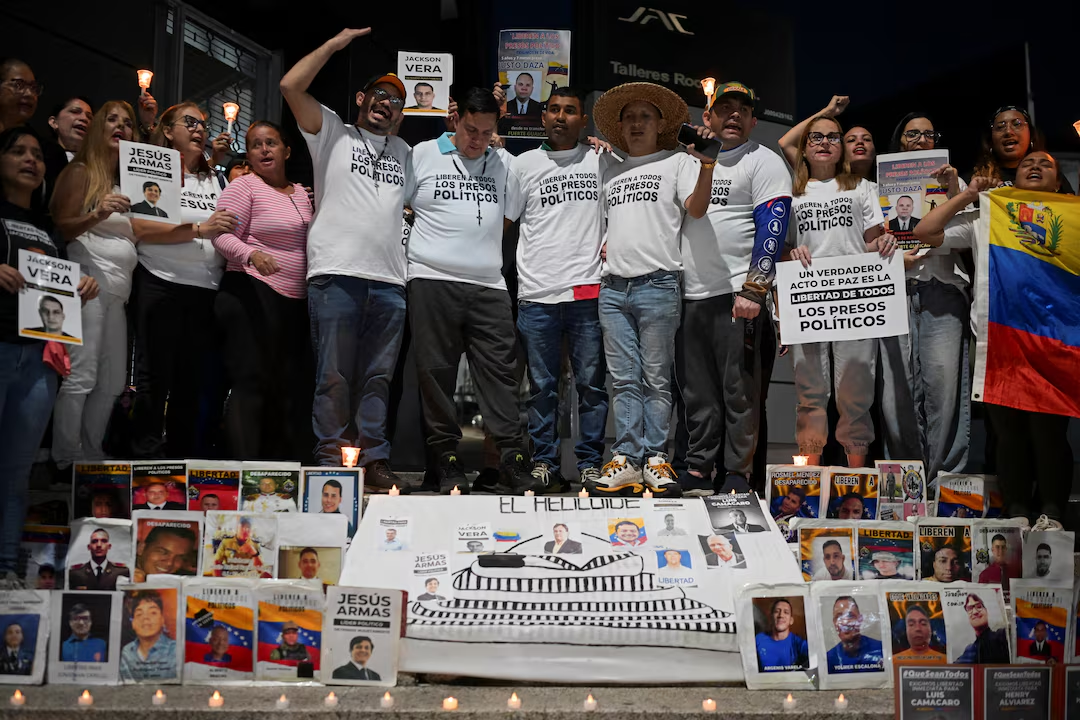
Venezuela has released more than thirty individuals considered political prisoners, according to the legal rights group Foro Penal. Among those freed on Sunday was prominent human rights activist Javier Tarazona. This brings the total number of verified releases since early January to 344. The government, however, denies holding any political prisoners and claims those jailed committed crimes. Consequently, the releases are part of a broader amnesty process announced by interim President Delcy Rodriguez, who also pledged to convert the notorious Helicoide detention center.
Tarazona, director of the NGO FundaRedes, had been imprisoned for over four years on terrorism and conspiracy charges. His release after 1,675 days marks a significant moment for Venezuela’s embattled civil society. His brother announced the news on social media, calling it “hope for all.” The government cites a higher release figure of over 600, but this includes prisoners freed in prior years. Families of remaining detainees argue the process is too slow and demand the expungement of charges against those still held.
The Amnesty Announcement and Prisoner Releases
Interim President Delcy Rodriguez announced a proposed “amnesty law” for hundreds of prisoners on Friday. She stated the Helicoide detention center in Caracas would be converted into a sports and social services facility. A 2022 UN report accused authorities of torturing prisoners at Helicoide, which the government rejected. The recent prisoner releases appear to be a direct result of this new policy shift. Foro Penal has verified 33 releases on Sunday alone, adding to the hundreds freed since January 8.
The acceleration of releases follows the US capture of former President Nicolas Maduro in early January. This geopolitical shift likely pressured the Venezuelan government to make concessions. However, officials maintain that those released were not political prisoners but individuals who had completed sentences or benefited from legal reviews. The discrepancy in numbers and definitions highlights the ongoing dispute between the government and human rights organizations over the nature of these detentions.
Prominent Figures Released and Those Still Detained
Javier Tarazona’s case garnered international attention. His organization, FundaRedes, documents abuses by armed groups and the military along the Venezuela-Colombia border. His arrest in mid-2021 was widely condemned as politically motivated. Other recently freed individuals include Rafael Tudares, the son-in-law of former opposition presidential candidate Edmundo Gonzalez. Their releases provide some relief to Venezuela’s opposition, but many high-profile figures remain behind bars.
Notable detainees still imprisoned include opposition politician Juan Pablo Guanipa, lawyer Perkins Rocha, and party leader Freddy Superlano. All are close allies of opposition leader and Nobel Peace Prize winner Maria Corina Machado. Guanipa’s son reported visiting his father on Sunday, noting he was in good condition. Foro Penal estimates over 700 political prisoners remain jailed despite the recent wave of releases. The government has not provided a list of those slated for release, adding to families’ anxiety and frustration.
International Context and Government Motives
The prisoner releases occur amid a shifting international landscape. The capture of Nicolas Maduro by the United States removed a central figure from the political scene. Interim President Delcy Rodriguez now leads a government seeking legitimacy and potentially improved relations with Western nations. Releasing political prisoners is a low-cost gesture that can generate goodwill and possibly ease sanctions. However, the government’s continued denial that these are political prisoners allows it to avoid admitting to systematic repression.
The proposed amnesty law and closure of Helicoide are also powerful symbolic acts. They aim to project an image of reform and reconciliation. However, skeptics note that similar promises have been broken in the past. The true test will be whether releases continue, whether charges are expunged, and whether security services cease arbitrary detentions. Without structural changes, these releases could be merely a tactical pause in a long-standing pattern of political persecution.
The Human Rights Landscape and Future Challenges
Foro Penal and other groups play a crucial role in documenting abuses and advocating for prisoners. The group’s vice president, Gonzalo Himiob, stated, “Every step towards freedom… is important.” Yet the path to comprehensive justice remains long. Many released prisoners bear the physical and psychological scars of alleged torture and prolonged isolation. Reintegrating them into a society still under authoritarian rule presents its own challenges.
The opposition, led by Maria Corina Machado, will likely use this moment to rally support and demand further concessions. The release of political prisoners has been a central demand for years. Achieving it partially strengthens the opposition’s morale but also tests its ability to maintain pressure for broader democratic reforms. The government’s strategy may be to release enough prisoners to defuse international criticism while retaining enough to keep the opposition off-balance.
A Cautious Step in a Protracted Crisis
The release of over thirty prisoners, including Javier Tarazona, is a positive development. It represents a crack in the edifice of political repression that has defined Venezuela for years. However, it is not a dismantling of that system. Hundreds remain detained, and the legal framework for arbitrary arrest remains intact. The conversion of Helicoide is promising, but other detention centers with poor conditions continue to operate.
The coming weeks will be critical. If releases continue and the amnesty law is passed and implemented transparently, it could signal a genuine shift. If the process stalls, it will be seen as a propaganda move. The families of those still imprisoned are watching closely, hopeful but wary. For now, each release is a personal victory and a collective step, however small, toward accountability and human rights in Venezuela.
Venezuela has released over 30 detainees considered political prisoners, including activist Javier Tarazona, a rights group says. Political prisoners.