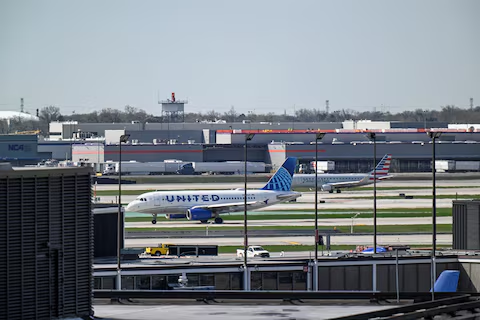
American Airlines said on Friday that it was not interested in a merger with United Airlines and had not held any such talks. This announcement diminishes prospects of an industry-reshaping deal that would face tough regulatory scrutiny. A combination of two of the largest U.S. network carriers would mark the biggest consolidation move in more than a decade. It would further tighten a domestic market already dominated by four similarly sized players. Including international flights, United and American were already the world’s two largest airlines by available capacity in 2025, according to OAG data.
The potential American Airlines merger United would invite extraordinary scrutiny from regulators, labor unions, and consumer advocates. These groups would worry about higher fares and reduced competition. Consequently, the deal would have slim chances of approval, analysts and industry officials have said. There is also significant overlap between American and United, including at Chicago O’Hare and major hubs in Texas.
American Airlines Rejects United’s Merger Pitch
“While changes in the broader airline marketplace may be necessary, a combination with United would be negative for competition and for consumers,” American Airlines said. The company added that such a deal would be inconsistent with its understanding of the Trump administration’s approach to antitrust enforcement. United Airlines declined to comment, while the White House did not immediately respond to a request for comment. The White House has previously said it has no opinion on a potential United Airlines deal for American Airlines.
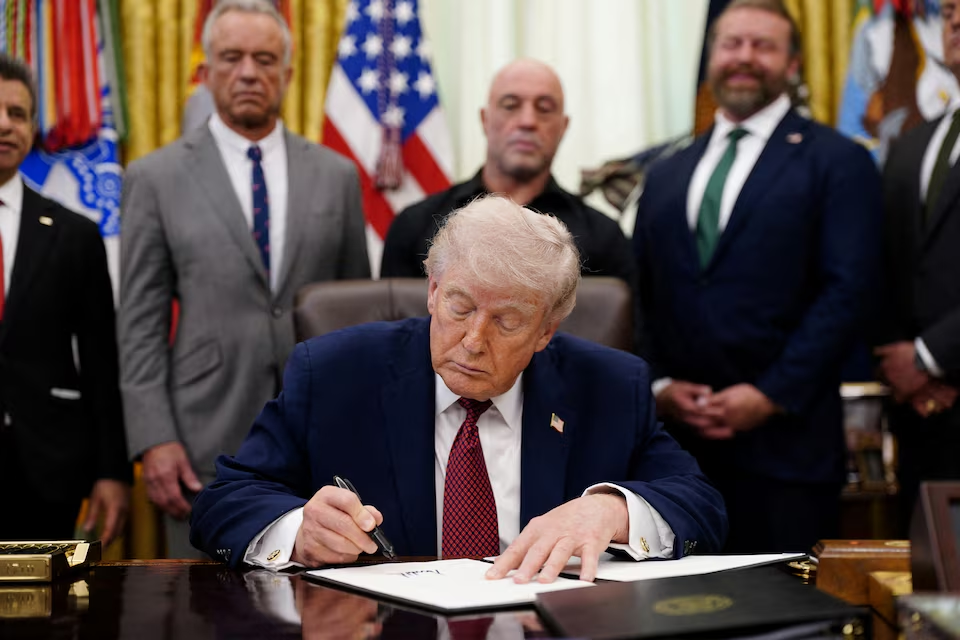
United Airlines CEO Scott Kirby pitched the potential for merging with American Airlines in a meeting with U.S. President Donald Trump in late February. Reuters reported this development on Monday. The meeting with Trump occurred three days before the start of the U.S.-Israeli war with Iran. That conflict sent jet fuel prices soaring and has led airlines to raise fares and fees to offset higher costs. Therefore, the timing of Kirby’s pitch proved challenging for any potential deal.
Kirby has argued to administration officials that a combined airline would be a stronger competitor in international markets. He also noted the Trump administration has focused on U.S. trade deficits around the globe, according to sources. However, one person close to the White House told Reuters there was skepticism about such a tie-up. The potential impact on competition and ticket prices raised concerns. The administration is already focused on rising costs for consumers ahead of midterm elections in November.
Regulatory Hurdles and Market Realities
The proposed American Airlines merger United would face unprecedented regulatory challenges. The Justice Department’s antitrust division has historically opposed mergers that reduce competition among major carriers. The four largest U.S. airlines—American, United, Delta, and Southwest—already control approximately 80% of the domestic market. Further consolidation would leave consumers with fewer choices and potentially higher fares.
Labor unions would also likely oppose a merger. Pilot and flight attendant groups have fought previous airline combinations over seniority integration and contract protections. Any American Airlines merger United would need approval from multiple unions representing hundreds of thousands of workers. That approval would not come easily.
The Trump administration has taken a mixed approach to antitrust enforcement. It blocked some mergers while approving others. However, the political calculus around an airline merger differs from other industries. Voters notice airfares and flight availability. Ahead of the November midterm elections, the White House would likely avoid any action perceived as raising consumer costs.
American Airlines’ firm rejection of merger talks effectively ends the immediate prospect of a deal. The company’s statement left no room for negotiation or future discussions. United Airlines now must focus on its standalone strategy. The industry will continue watching for other consolidation moves among smaller carriers. For now, the American Airlines merger United proposal is dead on arrival.