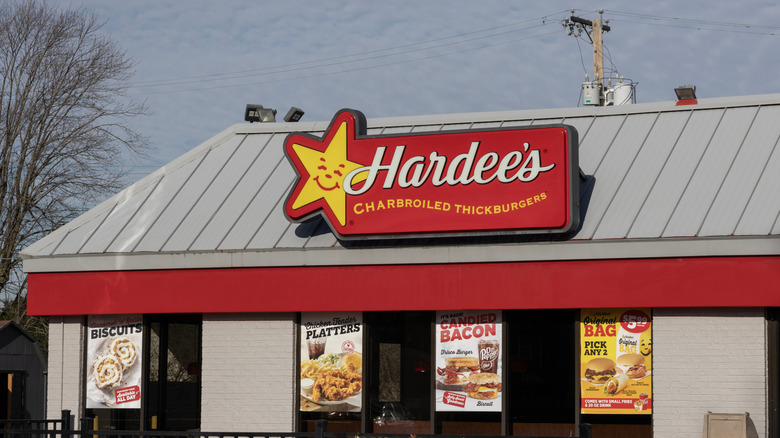
The Hardee’s franchise collapse has entered a decisive phase after ARC Burger LLC shut down all its locations and filed for liquidation, marking one of the most striking failures in the U.S. fast-food sector in recent months. The abrupt closure of 77 restaurants across multiple states highlights how quickly financial strain, legal disputes, and operational pressures can converge to dismantle a large franchise network.
ARC Burger confirmed it will not reopen any of its outlets after filing for Chapter 7 bankruptcy in the U.S. Bankruptcy Court for the Northern District of Georgia. The company described its situation as a period of significant financial instability, bringing a sudden end to operations that had expanded aggressively just two years earlier. The decision to liquidate rather than restructure signals that recovery was no longer viable under existing conditions.
The roots of the Hardee’s franchise collapse can be traced to ARC Burger’s rapid expansion strategy. In 2023, the company acquired approximately 80 locations from Summit Restaurant Holdings, itself emerging from bankruptcy proceedings. While the deal offered scale and market presence, it also introduced operational complexities and financial obligations that proved difficult to manage over time. Expansion often creates the illusion of growth, but without stable margins, it can amplify underlying weaknesses.
Financial disclosures reveal the depth of the crisis. ARC Burger accumulated more than $29 million in debt, with liabilities spanning tax obligations, vendor payments, and employee wages. The Georgia Department of Revenue is among the largest creditors, owed more than $400,000 in unpaid taxes. Former employees are also affected, with unpaid wages totaling around $19,000, a relatively small figure compared to total debt but significant for workers directly impacted by the closures.
The Hardee’s franchise collapse accelerated sharply following legal action initiated by Hardee’s in 2025. The franchisor alleged that ARC Burger had failed to pay approximately $6.5 million in royalties, advertising fees, and rent obligations. These payments are fundamental to the franchise model, supporting brand operations and marketing. When they go unpaid, franchisors typically respond with enforcement measures that can lead to termination of agreements and, ultimately, shutdowns.
As financial pressure intensified, ARC Burger began quietly closing locations late in 2025. Restaurants in states such as Montana, Illinois, and parts of the Midwest were among the first to shut their doors. These closures signaled deeper liquidity challenges and shrinking operational capacity. By the time the bankruptcy filing was made, the company had already dismantled much of its footprint, leaving little room for recovery.
The geographic spread of the closures underscores the scale of the Hardee’s franchise collapse. ARC Burger operated across Alabama, Florida, Georgia, Illinois, Kansas, Missouri, Montana, South Carolina, and Wyoming. The loss of these outlets affects not only customers but also local economies that rely on fast-food chains for employment and commercial activity. In smaller communities, the disappearance of a familiar brand can leave noticeable gaps in both job availability and consumer choice.
Employees bear the most immediate consequences. While the unpaid wage figure listed in the bankruptcy filing is modest relative to overall liabilities, it represents real financial strain for workers who suddenly find themselves without income. The situation reflects a broader pattern in corporate collapses, where frontline staff are often the least protected stakeholders despite being the most directly affected.
The Hardee’s franchise collapse also reflects wider pressures within the fast-food industry. Rising costs for labor, ingredients, and logistics have tightened margins across the sector. At the same time, consumers have become more price-sensitive, limiting the ability of operators to pass on increased costs. Franchisees, who operate under strict fee structures and brand requirements, face a particularly difficult balancing act.
Franchise agreements typically require operators to pay ongoing royalties and contribute to advertising funds, regardless of local performance. While these obligations support brand consistency, they can become burdensome during periods of declining revenue. ARC Burger’s inability to meet these commitments illustrates how quickly financial stress can escalate when fixed costs outpace income.
Another factor shaping the Hardee’s franchise collapse is the cycle of ownership within the restaurant industry. ARC Burger acquired its locations from a previous operator that had already undergone bankruptcy restructuring. Such transactions are common, as distressed assets are often sold to new owners seeking turnaround opportunities. However, these deals can carry hidden risks, including inherited inefficiencies, outdated infrastructure, and challenging lease terms.
Without substantial capital investment and strategic restructuring, these inherited issues can persist and even worsen. ARC Burger’s experience suggests that scale alone is not enough to ensure stability. Effective management, cost control, and alignment with franchisor expectations are equally critical.
For Hardee’s, the collapse represents a setback but not a systemic threat. Large franchisors typically respond to such situations by redistributing territories or onboarding new operators. Some of the shuttered locations may eventually reopen under different ownership, particularly in markets with strong demand. However, rebuilding will require careful selection of franchisees with the financial strength and operational expertise to avoid repeating past failures.
The Hardee’s franchise collapse serves as a warning signal for the broader industry. It highlights the vulnerability of franchise models during periods of economic uncertainty and underscores the importance of disciplined growth strategies. Operators that expand too quickly without securing stable financial foundations risk facing similar outcomes.
Looking ahead, the fast-food sector is likely to see increased scrutiny of franchise agreements and financial practices. Franchisors may tighten requirements for new operators, while investors and lenders may demand stronger safeguards against default. At the same time, consolidation could accelerate, with stronger players absorbing weaker ones to maintain market stability.
For consumers, the closures mark the end of a familiar dining option in several regions. For industry stakeholders, the episode offers a clear lesson in the risks of rapid expansion, high fixed costs, and unresolved financial obligations. The Hardee’s franchise collapse ultimately underscores a fundamental truth: in a competitive and cost-sensitive market, sustainability matters more than scale.