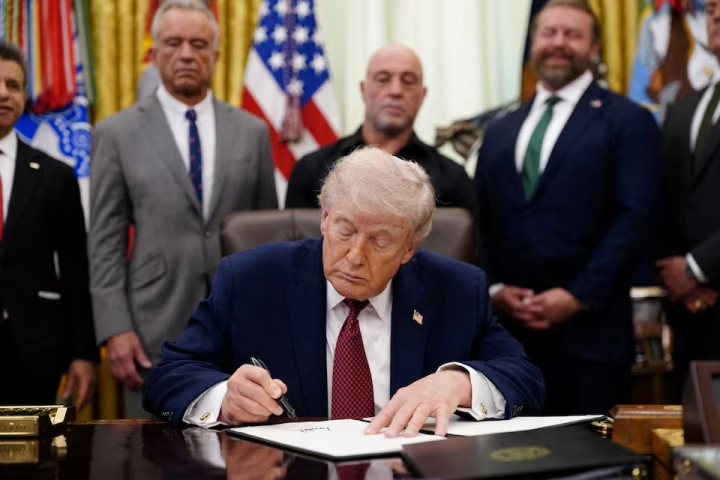
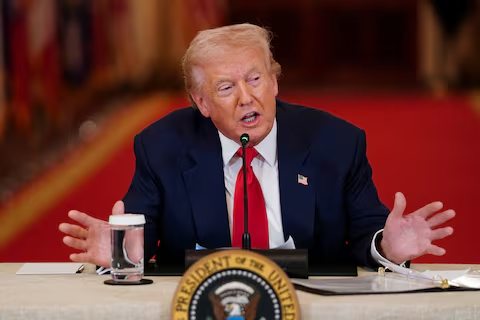
Federal Communications Commission Chairman Brendan Carr renewed his criticism and threats against broadcasters Saturday, this time with President Donald Trump’s complaints about Iran war reporting as the backdrop. The FCC Carr broadcasters warning came in an X post accompanied by a screenshot of Trump’s Truth Social message. Trump had accused the New York Times, Wall Street Journal, and “other lowlife ‘papers’ and media” of “terrible reporting” on the US and Israel’s war with Iran.
Carr wrote that broadcasters who air “fake news” must “correct course before their license renewals come up.” He added: “Broadcasters must operate in the public interest, and they will lose their licenses if they do not.” The FCC Carr broadcasters warning represents the latest escalation in administration pressure on news outlets covering the conflict.
Regulatory Authority Limits
The FCC issues licenses for television and radio broadcasters but does not regulate news outlets with only online and print distribution. The FCC Carr broadcasters warning therefore applies only to broadcast license holders, not the newspapers Trump specifically criticized. Carr has repeatedly stated he wants to enforce the FCC’s public interest obligation for broadcasters using public airwaves.
He argues the FCC has failed to properly deploy these requirements for decades. Saturday’s post referenced “hoaxes and distortions” during the 2024 presidential campaign, stating “the public has lost faith and confidence in the media.” By including Trump’s Iran war criticism, Carr for the first time extended his own warnings to wartime coverage specifically.
Trump Media Campaign
Trump has frequently accused news outlets of lying when they run stories he views as critical. He has previously called for removing licenses of broadcasters he considers unfair. The FCC Carr broadcasters warning aligns with this broader pressure campaign against media organizations.
The president’s Truth Social post singled out Iran war reporting as particularly problematic. Trump has offered conflicting statements about the conflict’s duration and objectives, sometimes declaring victory while promising continued strikes. Media coverage highlighting these contradictions appears to have drawn his ire.
Political Reactions
Democratic lawmakers and some prominent Republicans have criticized the Trump administration’s pressure campaign against broadcasters. Carr has defended his stance by citing polls showing widespread public distrust of media. The FCC Carr broadcasters warning frames license reviews as accountability rather than censorship.
Critics argue the administration seeks to intimidate outlets providing unfavorable coverage. First Amendment advocates warn that threatening license renewals over content creates chilling effects. The FCC Carr broadcasters warning arrives as journalists covering the Iran war face increasing hostility from officials.
Legal Framework
Broadcast license renewals occur every eight years for television stations and every seven years for radio. The FCC considers whether stations have operated in the public interest when reviewing renewals. The FCC Carr broadcasters warning suggests the agency may apply stricter scrutiny to stations whose coverage displeases the administration.
Historically, license revocations have been extremely rare and typically involve technical violations or fraud rather than content disputes. The FCC Carr broadcasters warning threatens to break this precedent if stations continue airing coverage officials deem problematic.
Industry Response
Broadcast industry groups have not yet commented on Carr’s latest statement. Previous warnings drew cautious responses emphasizing commitment to public service while defending editorial independence. The FCC Carr broadcasters warning may force stations to choose between courting administration anger or self-censoring wartime coverage.
News directors face practical concerns about license renewal risks while also maintaining journalistic standards. The FCC broadcasters warning creates uncertainty about what constitutes “public interest” in the administration’s view. Vague standards allow shifting interpretations based on political winds.
Wartime Context
The Iran war adds urgency to media freedom concerns. Wartime typically sees increased government pressure on journalists, but US broadcasters have historically maintained significant independence. The FCC broadcasters warning suggests this conflict may differ.
Accurate reporting on military operations serves vital public interest in democratic accountability. The FCC broadcasters warning could discourage in-depth coverage of war costs, casualties, and strategic decisions. Officials might prefer messaging control over independent journalism.
International Attention
Allies and adversaries alike watch US media freedom developments closely. The FCC broadcasters warning signals potential erosion of traditional protections. Countries with less press freedom may cite US actions to justify their own restrictions.
International press freedom organizations have condemned administration pressure on media. The FCC Carr broadcasters warning adds to concerns about democratic backsliding in the United States. How broadcasters respond will shape both domestic information environment and global perceptions.
Looking Forward
Carr’s post suggests continued focus on media content as license renewals approach. The FCC broadcasters warning may precede more specific actions against individual stations. Industry observers will watch for any actual renewal denials or conditions based on coverage.
For now, broadcasters must navigate conflicting pressures: professional standards, audience expectations, and administration threats. The FCC Carr broadcasters warning reminds them that federal licenses hang in balance. Whether that reminder chills reporting or galvanizes defense of press freedom remains to be seen.