Recent testimonies in the U.S. House Judiciary Committee have brought to light growing concerns about how European online speech regulations could restrict freedom of expression in the United States. European efforts to control online speech, specifically through initiatives like the Digital Services Act (DSA), have led to fears that these regulations could shape what Americans are allowed to say on social media platforms, even in the absence of American laws restricting such speech.
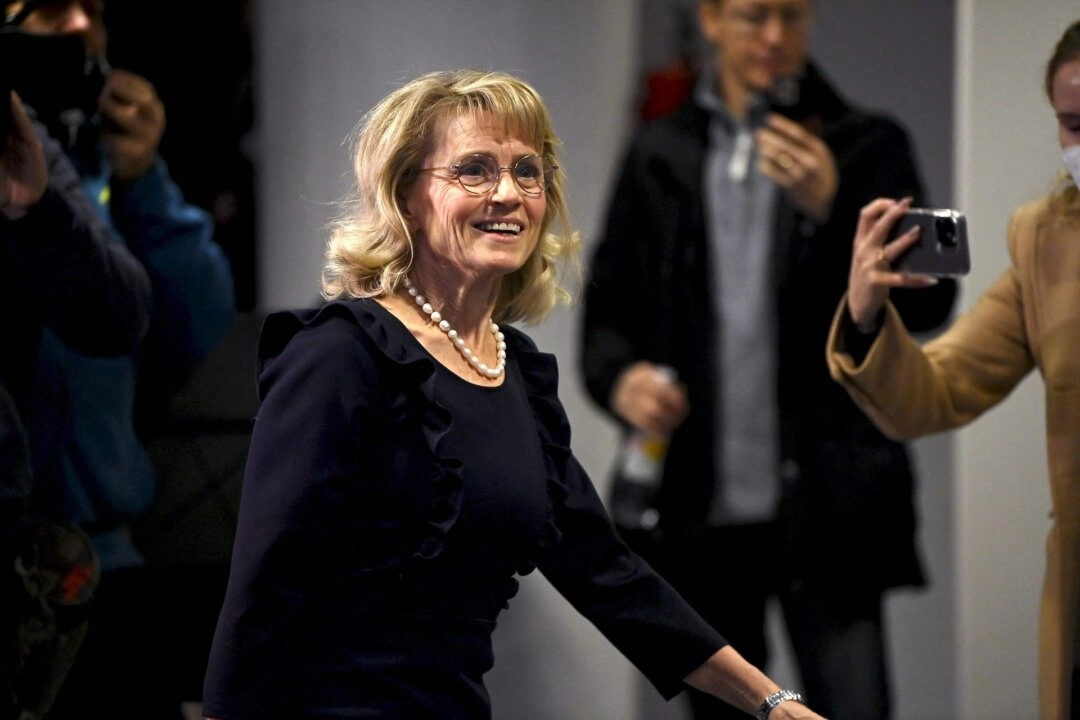
Paivi Rasanen, a Finnish Member of Parliament, shared her own experience of being prosecuted for expressing religious views on social media, underscoring the dangers of European speech laws that could have global ramifications. Rasanen was criminally charged for quoting Bible verses that questioned her church’s participation in a Gay Pride march. While she was initially acquitted, the case was appealed, and it is now pending before the Finnish Supreme Court. Rasanen’s prosecution is a stark example of how swiftly free expression can be curtailed when governments determine which beliefs are acceptable, and she warned U.S. lawmakers that such censorship could extend beyond European borders, affecting American speech online.
“I never imagined that quoting the Bible in a Twitter post would lead to years of criminal charges, yet this is now the reality in Europe,” Rasanen testified. “Americans should be concerned because once censorship is normalized, it never stays confined to one country.”
Growing Global Trend of Restricting Speech
Rasanen’s testimony highlights a broader trend of restricting religious and political speech, which is not limited to Europe. Similar movements are gaining ground in other Western countries. In Canada, the government is advancing a bill that would remove a religious exemption from “hate speech” laws in the Criminal Code. In Australia, the Queensland government has proposed legislation that would criminalize certain symbols and phrases, with penalties that could reach up to two years in prison.
Alongside these developments, the U.S. has seen increasing concerns about the reach of foreign censorship over American speech. Graham Linehan, an Irish writer and comedian, who was arrested in 2025 after traveling through Heathrow Airport for expressing views on transgender issues in the U.S., also spoke before Congress. Linehan echoed Rasanen’s concerns, highlighting how public authorities are targeting individuals for holding views that challenge politically correct orthodoxies.
“For a decade, the British police have harassed me for expressing views that the majority of the public share,” said Linehan. “We have simply been punished for objecting to fashionable yet incoherent orthodoxies.”
The EU’s Role in Shaping Global Content Moderation Policies
A new report titled The Foreign Censorship Threat, released on February 3, 2026, sheds light on how the European Commission has pressured global tech companies, including U.S.-based platforms, to adopt content moderation policies that align with European laws on “hate speech” and “misinformation.” The report claims that the European Commission’s decades-long campaign has successfully influenced social media platforms to censor content that complies with European speech rules, even if that content is legal under U.S. law.
According to the report, nonpublic documents obtained by the Committee indicate that social media companies, while claiming that compliance with EU regulations was voluntary, have been subtly coerced into adopting these restrictive policies. Emails between U.S. tech executives and European regulators have shown that companies like X (formerly Twitter) feel they have “no choice” but to adhere to EU demands to avoid hefty penalties. These pressures are seen as direct infringements on Americans’ right to free speech, particularly on platforms that operate globally.
U.S. lawmakers, including Judiciary Chair Jim Jordan (R-Ohio), have expressed concerns about the European Commission’s influence over U.S. tech platforms. Jordan highlighted that the European Commission’s actions are harming American speech, citing instances where EU regulators threatened social media companies with penalties for hosting content that was deemed offensive according to European standards, even when the content was lawful in the U.S.
“The European Commission is trying to censor speech and meddle in elections worldwide,” Jordan remarked. “When the European Commission makes censorship demands, platforms have to listen.”
Criticism of the Digital Services Act (DSA)
The European Union’s Digital Services Act (DSA), which was introduced to regulate online content and protect users from harmful materials, has been heavily criticized by some lawmakers and legal experts. According to critics, the DSA has become a tool for controlling speech rather than ensuring safety. Virginie Joron, a French member of the European Parliament, called the DSA a “Trojan horse for surveillance and control” and accused European governments of using the legislation as a political weapon to regulate online speech, particularly targeting platforms like X, Facebook, and Telegram.
Critics argue that the DSA’s far-reaching powers give European regulators unprecedented control over how U.S. tech companies moderate content on their platforms. Lorcan Price, an Irish barrister who defended Rasanen in her speech trial and testified at the House hearing, further explained the global impact of the DSA.
“The EU’s Digital Services Act gives European regulators unprecedented leverage over American tech companies, which means European speech rules can end up shaping what Americans are allowed to say online,” Price stated. He added that as U.S. platforms are pressured to comply with European censorship demands to avoid massive fines, those restrictions are inevitably applied globally, impacting American users as well.
Impact of Censorship Laws on U.S. Tech Companies
The reach of European speech laws extends beyond content moderation policies, with U.S. tech companies facing severe financial consequences for failing to comply. Price highlighted that companies such as X have already been fined €3.8 billion for violating EU speech codes. Furthermore, Spain has threatened to pursue criminal charges against company owners for non-compliance with these regulations.
“The enormous fines levied on X corporation by the European Commission have proved beyond all doubt that the European Union means to strangle free speech by a systemic assault on U.S. companies,” Price stated. He warned that the EU’s strategy includes mounting investigations, adding more regulations, and imposing crippling fines on tech companies, potentially aiming to break up or ban platforms that allow free speech to flourish.
In Germany, the government has stepped up efforts to crack down on “hate speech” with police raids targeting individuals accused of violating speech laws. In 2025, German authorities conducted early morning raids on 140 people suspected of posting hateful content online. The crackdown reflects broader European efforts to regulate digital spaces and restrict free expression, even as public sentiment in countries like Germany shows a growing fear of expressing opinions online.
The Role of AI in Online Speech Regulation
The rise of artificial intelligence (AI) in content creation and moderation has added a new dimension to the debate over online censorship. In February 2026, French authorities raided X’s offices over allegations that the platform was allowing the circulation of child pornography and pornographic deepfakes. This investigation, along with growing concerns about AI-generated content, highlights the complex challenges involved in moderating online speech, particularly when it comes to nonconsensual content.
The United States has recently passed the “Take It Down Act,” which requires social media platforms to remove nonconsensual sexual content within 48 hours. Similarly, European countries are grappling with the issue of AI-generated deepfakes, which complicate efforts to control harmful content online. Legal frameworks in both the U.S. and Europe are increasingly focused on regulating AI’s role in content creation, but this raises questions about the balance between freedom of expression and the need to protect users from harmful materials.
As countries on both sides of the Atlantic grapple with these issues, the potential for increased censorship of online speech remains a pressing concern. Lawmakers and legal experts continue to debate the scope of digital regulation and its implications for free speech, particularly in the context of global tech companies that operate across borders.