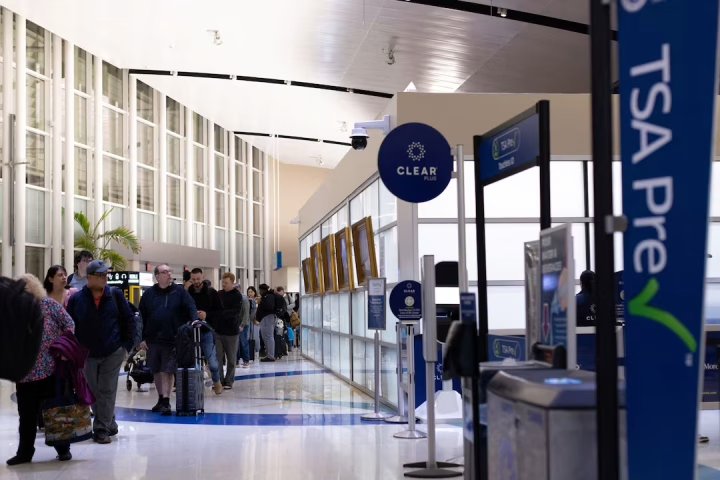
The U.S. Department of Homeland Security was on track for a partial shutdown starting Saturday at midnight. Annual funding expired after Republicans and Democrats failed to reach a deal on immigration enforcement reforms. Consequently, some “non-essential” workers will face furlough. However, the Trump administration’s intensive migrant deportation operations will likely continue. Most other domestic federal security programs will also proceed. This Homeland Security shutdown stems from a broader partisan conflict over the rules governing Immigration and Customs Enforcement (ICE) and Customs and Border Protection (CBP) agents.
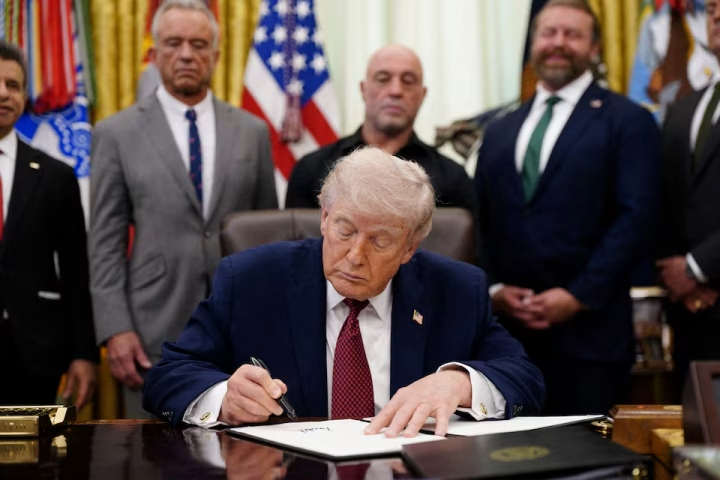
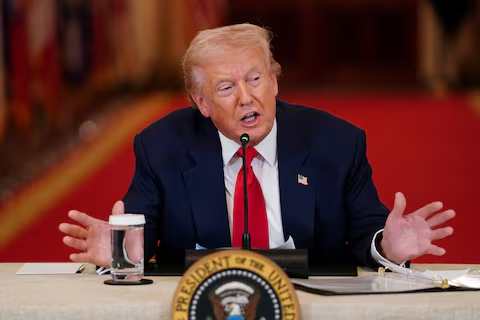
President Donald Trump blamed Democrats for the impasse. On Thursday, he accused them of wanting to put agents “in a lot of danger.” Democrats argue they simply want federal immigration agents to follow standard law enforcement guidelines. These guidelines aim to protect the public from overzealous activities. The dispute centers on demands for reforms, including requiring agents to remove masks while seeking migrants for arrest. Public outrage over aggressive actions in Minneapolis and other cities prompted these calls. Despite a 10-day congressional recess beginning Friday, no agreement was reached. Senate Majority Leader John Thune reported some progress on mask removal, but it proved insufficient to secure Democratic votes. Only one of 47 Senate Democrats supported the funding bill on Thursday.
Funding Streams and Exemptions
Even without new appropriations through September 30, DHS has substantial resources. The “One Big Beautiful Bill” enacted July 4 provided over $135 billion for ICE and CBP operations separately. Therefore, deportation and border enforcement activities will not cease. However, other DHS components face immediate funding disruption. The spending bill stuck in Congress includes money for the Secret Service, Coast Guard, and Federal Emergency Management Agency (FEMA). FEMA will rely on its disaster relief fund, which has about $7 billion available. Experts estimate this could last roughly two months. The Homeland Security shutdown therefore has uneven impacts, sparing high-profile enforcement but affecting other critical services.
The Minneapolis Catalyst and Reform Demands
Democrats’ reform demands gained urgency after events in Minneapolis. The fatal shootings of Renee Good and Alex Pretti by immigration agents during protests sparked outrage. Agents wore masks, making identification difficult. This fueled broader concerns about accountability and overreach. Democrats also cited instances of agents searching homes without warrants and detaining U.S. citizens. They seek to codify protections against such practices. The administration’s Thursday announcement ending the Minneapolis deportation surge operation failed to sway Democrats. Senator Jeanne Shaheen explained that without guarantees agents would not simply move to other cities or continue warrantless actions, the underlying issues remain unresolved. This Homeland Security shutdown therefore reflects deep disagreement over the very character of federal immigration enforcement.
Political Standoff and Historical Context
The shutdown follows a record-long, 43-day government disruption late last year over health insurance subsidies. This pattern of recurring funding crises highlights deep partisan polarization. President Trump’s personal involvement, signaled on Friday, indicates the high political stakes. He stated, “We have to protect law enforcement,” framing the dispute as a choice between agent safety and public accountability. Democrats counter that accountability and safety are not mutually exclusive. The 10-day recess means no immediate legislative resolution is possible. The shutdown will therefore persist at least until Congress returns. Its duration depends on whether the two parties can bridge their fundamental differences on immigration oversight during that time.
Impact on Workers and Agencies
The partial shutdown will furlough employees deemed “non-essential.” Workers at agencies like FEMA, the Secret Service, and the Coast Guard face uncertainty. While FEMA has a temporary funding cushion, prolonged shutdown would deplete it. The Secret Service, responsible for protecting national leaders, must operate with reduced staffing. The Coast Guard’s law enforcement and search-and-rescue missions could degrade. Morale across affected agencies will suffer. Workers already stressed by previous shutdowns now face another period of financial insecurity and operational disruption. The uneven funding—robust for ICE and CBP, starved for others—also creates internal agency tensions and prioritization challenges.
Outlook and Path to Resolution
The path to resolving the Homeland Security shutdown requires compromise on immigration enforcement rules. Democrats must decide whether the current impasse is worth the disruption to other DHS functions. Republicans must assess whether conceding on mask rules and warrant limits undermines their enforcement-first posture. President Trump’s involvement could break the logjam or harden positions. His past shutdowns have often ended with him backing down, but his current political strength and focus on immigration suggest a prolonged fight. The coming days will test each party’s resolve and the public’s tolerance for another federal funding crisis. Ultimately, the shutdown’s end depends on whether both sides see more value in a functioning DHS than in scoring political points over its most controversial components. Until then, the department operates in a state of partial paralysis, with critical functions strained and thousands of workers in limbo.