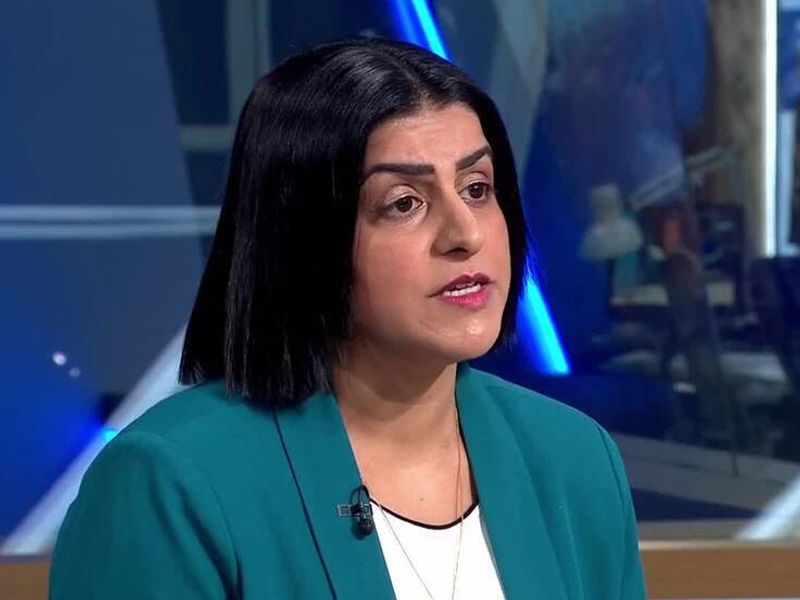
The UK government is preparing a sweeping UK asylum overhaul that will significantly reshape how refugees access long-term protection, as Home Secretary Shabana Mahmood warns that illegal migration is “tearing the country apart.” Her upcoming announcement introduces long waiting periods for settlement, repeated reviews of refugee status, and a tougher approach inspired by Denmark’s model of temporary protection.
Mahmood insists the reforms reflect a “moral mission,” arguing that public confidence in the asylum system has eroded and that inaction could undermine support for legitimate refugee protection. The policy also aims to weaken smuggling networks and reduce small-boat crossings, a major political issue across the UK.
Settlement wait increased to 20 years under the UK asylum overhaul
Under the new framework, refugees will no longer apply for permanent settlement after five years. Instead, they must wait 20 years and undergo a review every two-and-a-half years to assess whether their country of origin has become safe. Anyone whose home nation is reclassified as safe would be expected to return.
Mahmood hinted that asylum seekers entering through legal channels and contributing to the economy may gain earlier access to settlement, though she offered no clear criteria. These ideas closely mirror Denmark’s system, where temporary residence permits must be renewed frequently, leaving refugees in prolonged uncertainty.
Danish officials say this approach is meant to discourage smugglers from targeting the country. Mahmood appears to share this thinking, emphasizing deterrence while maintaining limited access to legal migration pathways.
Support for asylum seekers to become conditional
The UK asylum overhaul also includes changes to housing and financial support. Mahmood wants these benefits to become discretionary rather than guaranteed. She argued that about 10% of asylum seekers already hold the right to work yet face no expectation to support themselves.
The home secretary claims that criminal gangs lure migrants by promising hotel accommodation and free food, creating “pull factors” that encourage irregular journeys. She also contends that asylum seekers sometimes receive better support than struggling British citizens, which she says is “not fair.”
Political reactions highlight deep divisions
The reforms triggered strong reactions across the political spectrum.
Shadow Home Secretary Chris Philp dismissed the plans as weak and ineffective, saying Labour was “tinkering at the edges” and that Conservatives would instead push for leaving the European Convention on Human Rights and deporting illegal arrivals within a week.
On the other side, Liberal Democrat leader Sir Ed Davey argued that asylum seekers should be allowed to work legally, which would reduce state dependency and improve integration.
Some Labour MPs expressed concern that the policy mirrors far-right rhetoric, but Mahmood rejected this, citing her own migrant background and insisting the system must be protected from abuse to retain public trust.
Refugee groups warn of long-term instability
Human rights groups warn that the UK asylum overhaul could trap refugees in decades of insecurity.
Enver Solomon, CEO of the Refugee Council, said the 20-year timeline would leave people anxious, isolated, and unable to rebuild their lives or contribute meaningfully to communities.
Migration experts argue that deterrence policies have limited effectiveness. Madeleine Sumption, director of the Migration Observatory, noted that many asylum seekers prioritize language, family ties, or past failures in other countries over detailed policy conditions.
Experiences from Denmark suggest similar concerns. Syrian refugee Agob, who has lived under Denmark’s system for 13 years, described the uncertainty as “living with everything temporary,” making true integration nearly impossible.
Rising arrivals intensify pressure for action
The reforms come at a time of growing arrivals. More than 1,069 migrants reached the UK in the last week alone, and over 10,289 have crossed the Channel since Mahmood took office. With more than 39,000 small-boat arrivals recorded so far this year, the figures have already surpassed totals for 2023 and 2024.
A total of 109,343 asylum claims were made in the 12 months to March, a 17% rise compared to the previous year. Critics say communities feel overwhelmed, while advocates argue the surge reflects global conflict and instability rather than domestic policy weakness.
A defining test for the government
Mahmood is expected to outline legislative changes next, including how the UK will interpret Article 8 of the ECHR in immigration cases. Her proposals represent one of the most significant policy shifts in recent UK political history.
Whether the reforms will curb illegal migration or create a system of long-term instability remains deeply contested. The coming weeks will show whether the government can unite around this tougher asylum direction—or whether Britain’s migration debate will become even more polarized.