The U.S. Customs and Border Protection agency announced it will halt collections of tariffs imposed under the International Emergency Economic Powers Act. The cessation takes effect at 12:01 a.m. EST on Tuesday. This decision comes more than three days after the U.S. Supreme Court declared these specific duties illegal. The agency communicated the change through a message to shippers on its Cargo Systems Messaging Service. It confirmed it will de-activate all tariff codes associated with former President Donald Trump’s prior IEEPA-related orders as of Tuesday.
Agency Delays Follow High Court Ruling
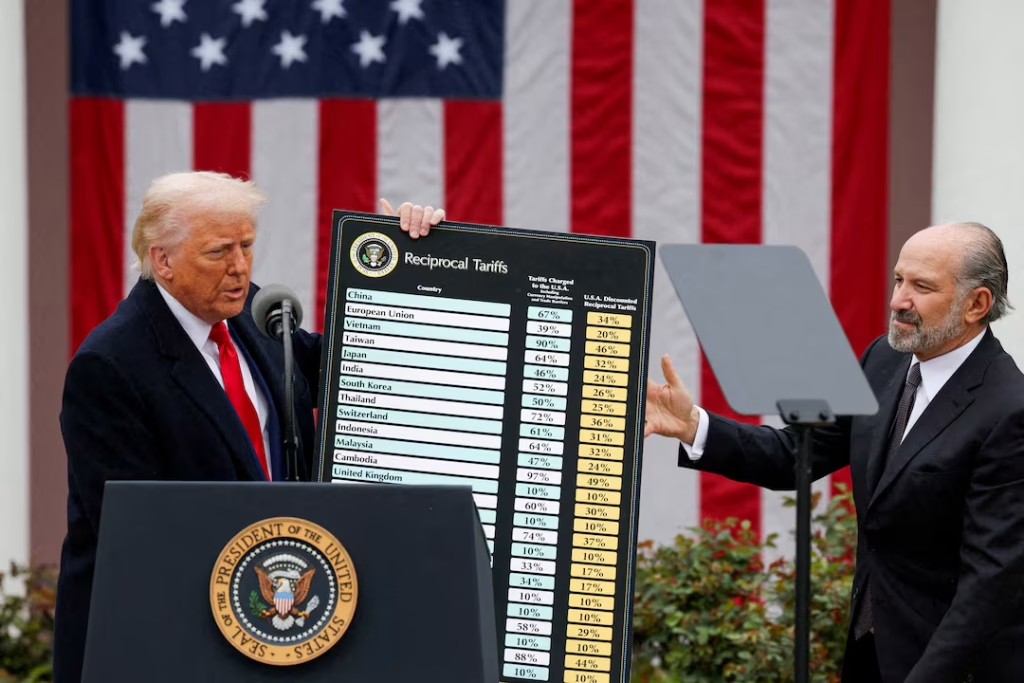
The announcement leaves several critical questions unanswered. CBP provided no explanation for why it continued collecting the tariffs at ports of entry for several days after the Supreme Court’s Friday ruling. Additionally, its message offered no information about possible refunds for importers who paid the duties during that period. The timing of the IEEPA tariff collection halt coincides with Trump’s imposition of a new, 15% global tariff. The administration enacted this new levy under a different legal authority to replace the ones the Supreme Court struck down.
The distinction between various tariff authorities matters significantly for importers. CBP explicitly noted that the collection halt does not affect other tariffs imposed by Trump. These include duties under the Section 232 national security statute. They also include tariffs under the Section 301 unfair trade practices statute. Therefore, businesses must continue paying those separate levies without interruption. The agency stated it would “provide additional guidance to the trade community through CSMS messages as appropriate,” leaving stakeholders waiting for clarity.
Billions in Revenue Now Subject to Refund Questions
The financial stakes in this transition are extraordinarily high. Reuters reported on Friday that the Supreme Court decision made more than $175 billion in U.S. Treasury revenue subject to potential refunds. This estimate comes from the Penn-Wharton Budget Model economists. Their ground-up forecasting model showed that IEEPA-based tariffs were generating more than $500 million per day in gross revenue. Consequently, the question of refunds for these payments now looms large over the trade community.
Importers who paid these duties since their implementation may seek reimbursement. However, CBP’s current message remains silent on this process. The lack of guidance creates uncertainty for businesses engaged in transatlantic and global trade. Many had factored these tariff costs into their pricing models and supply chain decisions. A retroactive refund could provide significant financial relief. Conversely, a decision to keep the revenue could spark further legal challenges from affected industries.
Separate Legal Authority Powers New Tariffs
The administration’s quick move to impose new 15% global tariffs demonstrates its commitment to protectionist trade policies. By using a different legal foundation, the White House aims to maintain its tariff regime despite the Supreme Court setback. This new IEEPA tariff collection halt specifically targets the invalidated duties only. It does not signal a broader retreat from aggressive trade enforcement. Trade lawyers and customs brokers must now navigate this complex patchwork of active and defunct tariff programs.
The practical implications for port operations appear manageable for now. CBP systems will simply de-activate the specific tariff codes at the appointed time. Importers filing entries after the deadline will not face the now-illegal charges. However, entries filed between the Friday ruling and Tuesday morning remain in a legal gray area. Industry groups are likely to press for clear guidance on如何处理 those specific transactions in the coming days and weeks.
Trade Community Awaits Further Clarification
The CBP message offered a glimpse into the operational challenges facing customs authorities. De-activating tariff codes across a massive system requires careful coordination. Nevertheless, stakeholders question why the agency could not act more swiftly after such a definitive Supreme Court ruling. The delay meant millions in additional duties potentially collected without legal basis. Transparency advocates will likely scrutinize this gap between judicial action and administrative compliance.
Looking ahead, the focus shifts to the refund mechanism. Will importers need to file formal claims for duties paid under the now-invalidated program? Could the Treasury Department initiate automatic refunds for recent payments? These questions remain unanswered as of Sunday. The CBP promise of additional guidance suggests the agency recognizes the need for a comprehensive response. Until then, businesses must document their IEEPA tariff payments carefully while awaiting further instructions.