The landscape of international trade shifted dramatically this week as the US imposed 10% tariff on almost all incoming goods. Specifically, a notice from U.S. Customs and Border Protection (CBP) confirmed the implementation of this new rate starting Tuesday. Notably, this move follows a period of significant legal and political tension in Washington.
After the Supreme Court recently invalidated previous emergency-based duties, the administration pivoted to a different legal framework to maintain its trade agenda. Consequently, the current 10% rate applies to all products not specifically covered by exemptions. However, the rollout has sparked widespread confusion among global trade partners and domestic importers alike.
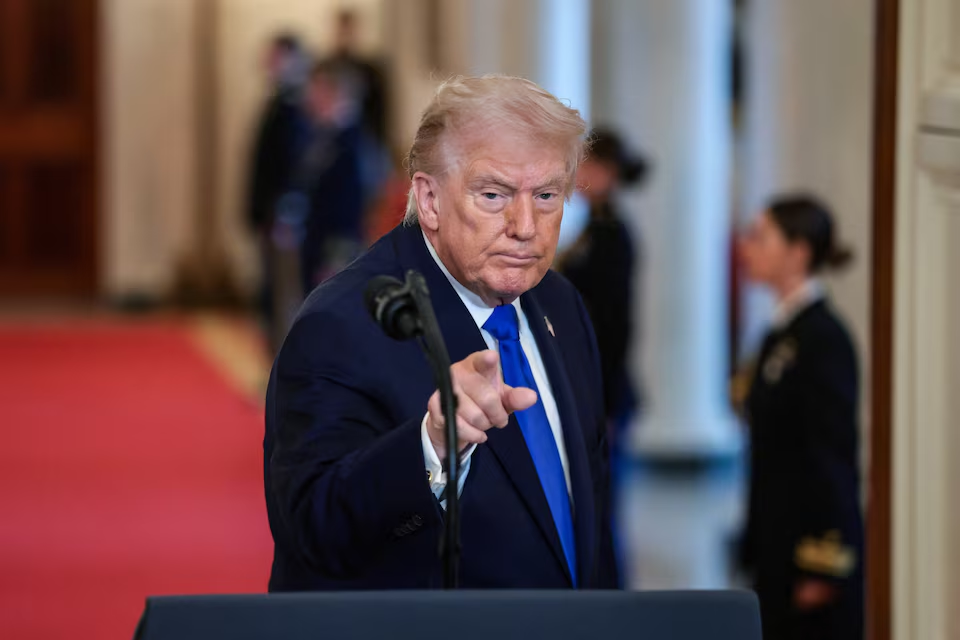
To begin with, the actual percentage of the duty has been a moving target over the last few days. President Donald Trump initially suggested a 10% rate on Friday. Shortly thereafter, he promised to increase that figure to 15% during a Saturday announcement. Nevertheless, the official guidance issued by CBP stuck with the lower 10% figure for the Tuesday launch. As a result, many market analysts are left wondering why the promised increase did not materialize immediately.
In fact, some reports suggest a higher rate might still arrive at a later date. Therefore, businesses are currently operating in a state of high uncertainty as they adjust to the immediate financial impact of these new costs.
Regarding the legal basis, the administration is now utilizing the Section 122 law to justify these actions. Specifically, this law allows a president to impose duties for up to 150 days to address serious balance-of-payments deficits. In this case, the president’s order pointed to a $1.2 trillion annual goods trade deficit as a primary concern.
Furthermore, the order cited a current account deficit sitting at 4% of GDP. By shifting to this law, the White House hopes to bypass the legal hurdles that ended the previous tariff regime. Meanwhile, the collection of those older, annulled tariffs—which reached as high as 50%—has officially stopped.
On the global stage, the fact that the US imposed 10% tariff has triggered immediate diplomatic reactions. For instance, Japan has already asked for favorable treatment to ensure its existing trade agreements remain respected. Similarly, both the European Union and Britain have signaled their desire to stick to previously negotiated deals.
Despite these pleas, President Trump recently warned other nations against backing away from recent trade commitments. In addition, he threatened even higher duties under different laws if countries do not comply. Consequently, the global supply chain is bracing for a period of potentially volatile negotiations and retaliatory measures.
Ultimately, the long-term impact of this trade policy remains to be seen. Because the new duties took effect at midnight, companies must now account for these costs in real-time. Moreover, the lack of clarity regarding the potential jump to 15% makes long-term pricing strategies difficult. In short, the sudden shift from the Supreme Court’s annulment to this new 10% levy has kept the business world on edge.
Moving forward, all eyes will be on the White House for further proclamations. For now, the global market must navigate a reality where the US imposed 10% tariff serves as the new baseline for international commerce.