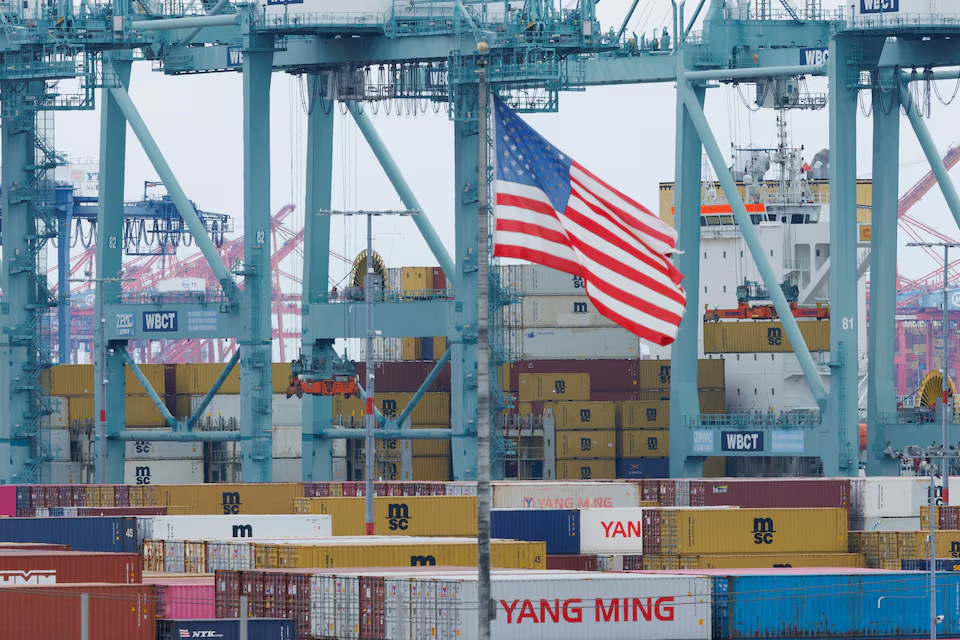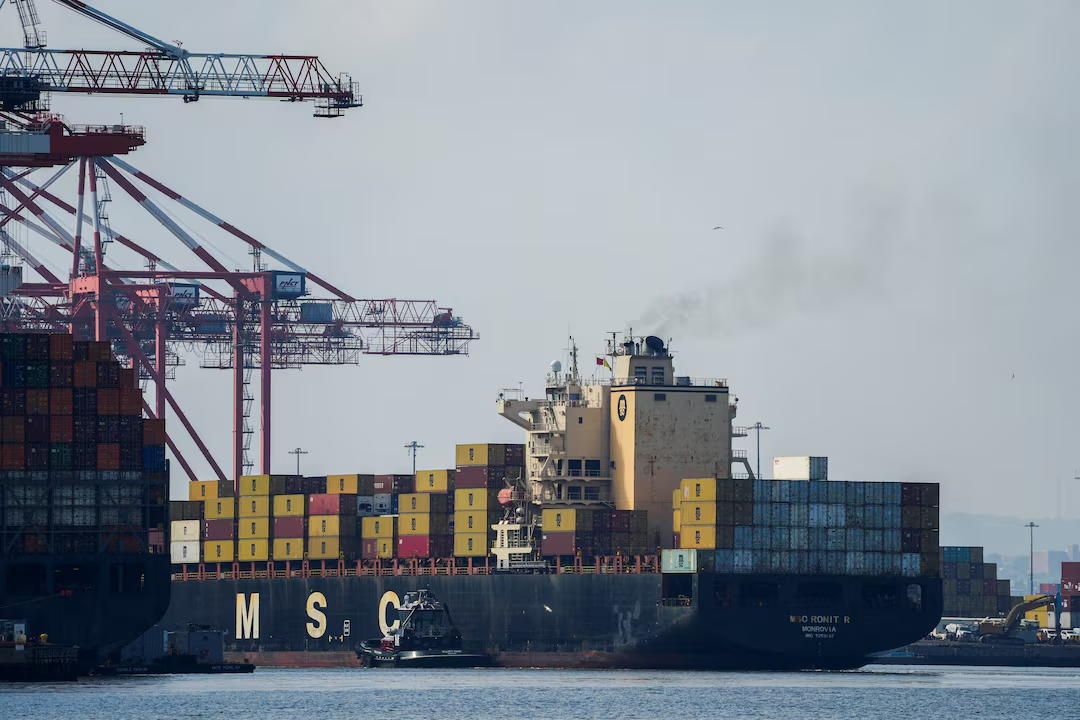
The European Commission issued a firm demand on Sunday for the United States to uphold the terms of the EU US trade deal brokered last year. This strong reaction follows a U.S. Supreme Court decision that struck down former President Donald Trump’s global tariffs. The current administration then announced new, across-the-board levies. The Commission, which manages trade policy for the 27-nation bloc, stated that Washington must now provide “full clarity” on its intended actions. The core message from Brussels was unequivocal: a deal is a deal.
Legal Ruling Triggers Trade Uncertainty
The dispute stems from a complex legal and political sequence. On Friday, the U.S. Supreme Court invalidated the previous global tariffs. In a swift response, the U.S. president announced temporary, across-the-board tariffs of 10%. He then increased these to 15% just a day later. This rapid escalation has thrown the future of the carefully negotiated EU US trade deal into uncertainty. The European Commission’s initial response on Friday was muted, stating only that it was studying the ruling. However, Sunday’s statement represents a significant hardening of its position.
The 2023 EU US trade deal was designed to de-escalate previous trade tensions. It set a 15% U.S. tariff rate for the majority of EU goods, with specific exceptions. Products like aircraft and spare parts received zero-tariff access. In exchange, the EU agreed to eliminate import duties on a range of U.S. products. Brussels also withdrew its threat to impose retaliatory levies. The core principle was to create a stable and predictable trading environment. The Commission argues this principle now faces a direct threat from the unilateral U.S. actions.
Brussels Insists Agreement Must Stand
“The current situation is not conducive to delivering ‘fair, balanced, and mutually beneficial’ transatlantic trade and investment, as agreed to by both sides,” the European Commission declared. It quoted directly from the joint statement that established the EU US trade deal. The statement emphasized that unpredictable tariffs disrupt global markets. They also erode business confidence across both continents. By insisting that EU products must benefit from the most competitive treatment, the Commission is drawing a clear line in the sand. Brussels demands no tariff increases beyond the previously agreed ceiling.
A key point of confusion now surrounds the newly announced U.S. tariffs. It remains unclear whether the 15% rate supersedes the rates established in the EU US trade deal. If it does, the zero-tariff exemptions for certain EU goods could vanish. Furthermore, the new tariffs might apply on top of pre-existing duties. The bilateral deal specifically aimed to prevent this scenario. The comparative advantage that EU exporters gained under the 15% rate also appears nullified. Consequently, countries without any trade deal with the U.S. now face that same baseline tariff.
Economic Impact Projections Raise Concerns
Trade policy monitor Global Trade Alert has already estimated the potential economic fallout. Their analysis suggests the EU as a whole could be 0.8 percentage points worse off. Member states would face uneven effects under the new U.S. tariff regime. Italy, for example, might face an additional 1.7 percentage points of U.S. tariffs on its exports. These figures underscore the tangible economic stakes behind the political rhetoric. They also explain the urgency of the Commission’s demand for clarity and adherence to the existing EU US trade deal.
High-level discussions are already underway to address the impasse. The European Commission confirmed that EU Trade Commissioner Maros Sefcovic held discussions with U.S. officials on Saturday. He spoke with U.S. Trade Representative Jamieson Greer and Commerce Secretary Howard Lutnick. These talks are now critical for determining the future trajectory of transatlantic commerce. The outcome will signal whether the U.S. intends to honor its previous commitments. Alternatively, it could indicate that a new phase of trade friction is about to begin. This directly challenges the foundation of the EU US trade deal.
Fundamental Norms of Global Governance
The principle that international agreements must be respected stands at the heart of the EU’s argument. By invoking the phrase “a deal is a deal,” Brussels appeals to a fundamental norm. The coming days will prove crucial as both sides clarify the legal and commercial landscape. For now, the European Commission has staked out its position clearly. It insists on stability and warns against the dangers of unpredictable tariff policies. Such policies could undermine the very confidence global markets rely upon for growth and investment.