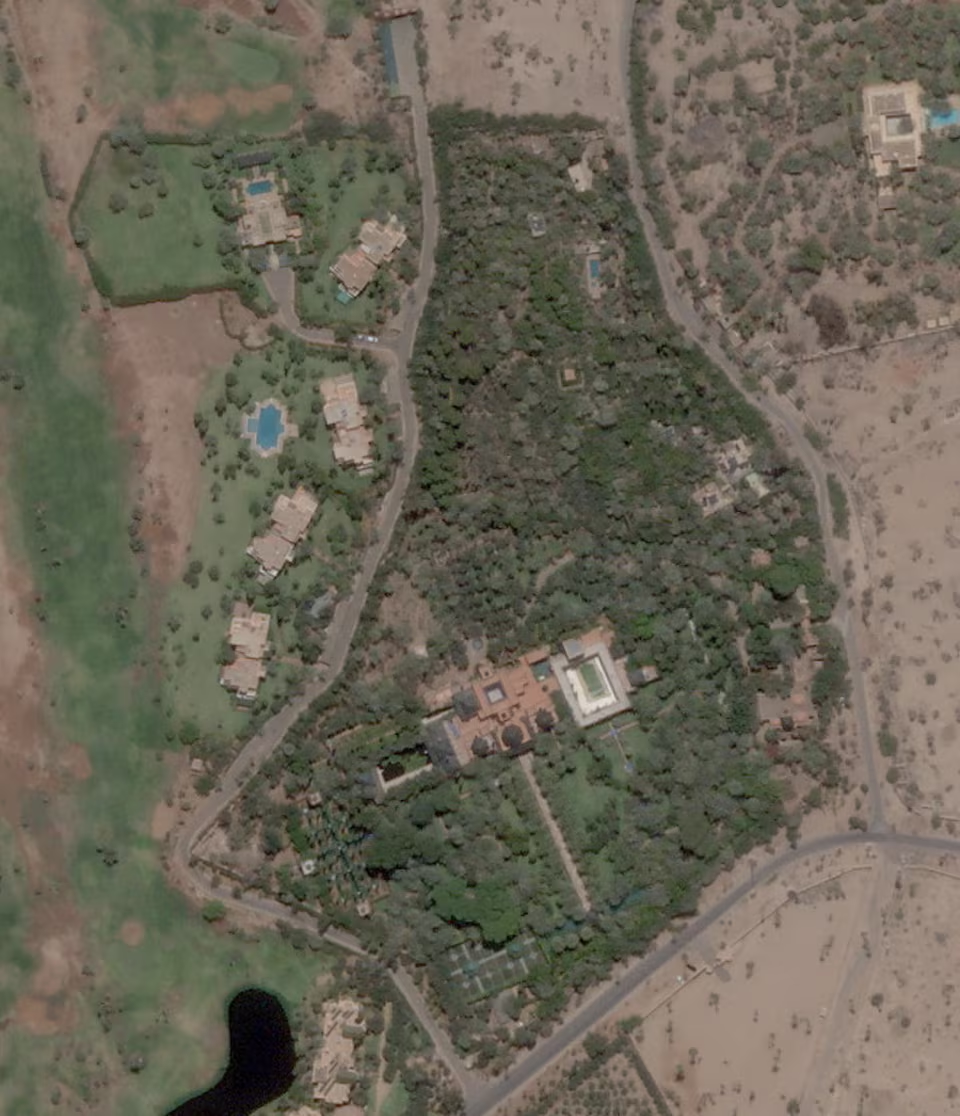
Newly released U.S. Department of Justice documents reveal that Charles Schwab processed approximately $27.7 million in wire transfers on behalf of Jeffrey Epstein in the weeks leading up to his July 2019 arrest. The funds were intended for the purchase of an opulent palace in Marrakesh, Morocco.
The transactions involved Epstein’s company Southern Trust and targeted a property known as Palace Bin Ennakhil. Schwab flagged several of these payments in a suspicious activity report submitted to the Financial Crimes Enforcement Network on July 13, 2019, shortly after Epstein’s detention.
Epstein, already under intense scrutiny following investigative reporting in 2018, sought to acquire the lavish estate through negotiations that dated back several years. The deal ultimately collapsed following his arrest on federal sex trafficking charges.
Epstein Schwab Payments Surface in DOJ Files
Documents show Schwab opened three accounts for Epstein-related entities in April 2019. One account belonged to Southern Trust, where Epstein served as president and sole beneficial owner, with his longtime accountant Richard Kahn listed as an authorized individual.
Southern Trust instructed Schwab to initiate a wire transfer of about $12.7 million in euros to Marrakesh-based realtor Marc Leon on June 26, 2019. The payment aimed to advance the purchase of Bin Ennakhil but was reversed the following day after a call citing unacceptable deal terms.
Schwab successfully halted and reversed the transfer, with funds scheduled to return by July 10. Meanwhile, Epstein signed a new request on July 4 directing $14.95 million to Leon’s account at Julius Baer in Switzerland.
This second transfer proceeded despite insufficient funds in the Southern Trust account, pending the return of the prior payment. Schwab executed the wire, exposing itself to temporary risk until the original amount cleared.
On July 9, three days after Epstein’s arrest, an associate requested cancellation of the $14.95 million transfer. Kahn later confirmed the cancellation via email.
Details of the Marrakesh Property Transaction
Palace Bin Ennakhil spans 4.6 hectares in Marrakesh and features extensive luxury amenities. The estate includes gold-draped interiors, a hammam spa, 60 marble fountains, an outdoor pool and jacuzzi, multiple gardens, hundreds of olive trees, and over 2,000 palm trees.
Realtor Marc Leon confirmed long-running discussions with Epstein, noting initial interest in 2011. He emphasized that Epstein had completed his 2008 sentence and that standard anti-money laundering checks occurred through involved banks.
The transaction never finalized, and the palace has since found a new owner.
Schwab’s Response and Compliance Actions
Schwab stated that it began investigating the accounts shortly after opening and terminated the relationship within 60 days. The firm referred the matter to federal law enforcement and cited federal regulations, privacy laws, and internal policies in declining further comment on specifics.
Under the Bank Secrecy Act, institutions must file suspicious activity reports within 30 days of detecting concerning facts. Schwab’s July 13 filing expressed worries about the attempted real estate wires amid negative media coverage of Epstein and potential flight risk concerns ahead of a bail hearing.
The brokerage noted internal referrals drove the investigation. FinCEN declined to comment on the matter.
Broader Context of Epstein’s Financial Arrangements
Epstein shifted banking relationships in 2019 as Deutsche Bank wound down his accounts. Schwab became one of several firms later subpoenaed by the U.S. Virgin Islands in 2020 for documents related to Epstein’s estate executors, though no accusations of wrongdoing targeted Schwab.
The Epstein Schwab payments highlight ongoing scrutiny of financial institutions that serviced the financier during a period of heightened public and legal attention. Epstein died in custody in August 2019 while awaiting trial.
Kahn faces upcoming congressional testimony regarding his role in managing Epstein’s finances. No evidence has emerged linking him to criminal activity.
These revelations stem from a larger release of DOJ documents that have since been partially withdrawn for unspecified reasons. The files provide insight into Epstein’s final financial maneuvers before his arrest.
The attempted acquisition of Bin Ennakhil reflects Epstein’s pursuit of international real estate even as legal pressures mounted. The transactions underscore challenges financial firms face in monitoring high-profile, high-risk client activity under existing compliance frameworks.
As more details from related investigations emerge, attention continues to focus on the intersection of wealth management, regulatory oversight, and high-profile criminal cases.