Just as businesses and policymakers began to hope the tumultuous trade policy reversals of 2025 were finished, a new wave of instability has arrived. A U.S. Supreme Court ruling last week struck down key parts of President Donald Trump’s tariff plans. The president’s ensuing suggestion of substantial new levies as a workaround has rekindled economic uncertainty. The landscape of which goods will face taxation, at which rates, and from which countries is again up in the air. This renewed tariff uncertainty forces companies to reconsider pricing strategies, inventory decisions, and investment timelines.
The situation now echoes the early months of 2025, when administration proposals seemed to change on a moment’s notice. Many businesses had felt they finally developed a workable approach to higher tariffs. Now they must decide whether to rush restocking inventories while rules remain in limbo. Some may delay hiring or capital expenditure plans until the situation stabilizes. The volatility creates significant challenges for long-term business planning across multiple sectors of the economy.
European Central Bank Chief Weighs In
European Central Bank president Christine Lagarde addressed the growing confusion on Sunday. Speaking on CBS’s “Face the Nation,” she emphasized the importance of stable trade rules. “You want to know the rules of the road before you get in the car. It’s the same with trade. It’s the same with investment,” Lagarde stated. She noted that people “want to do business. They don’t want to go into lawsuits.” Lagarde expressed hope that any subsequent U.S. tariff plans would receive sufficient thought and comply fully with constitutional requirements.
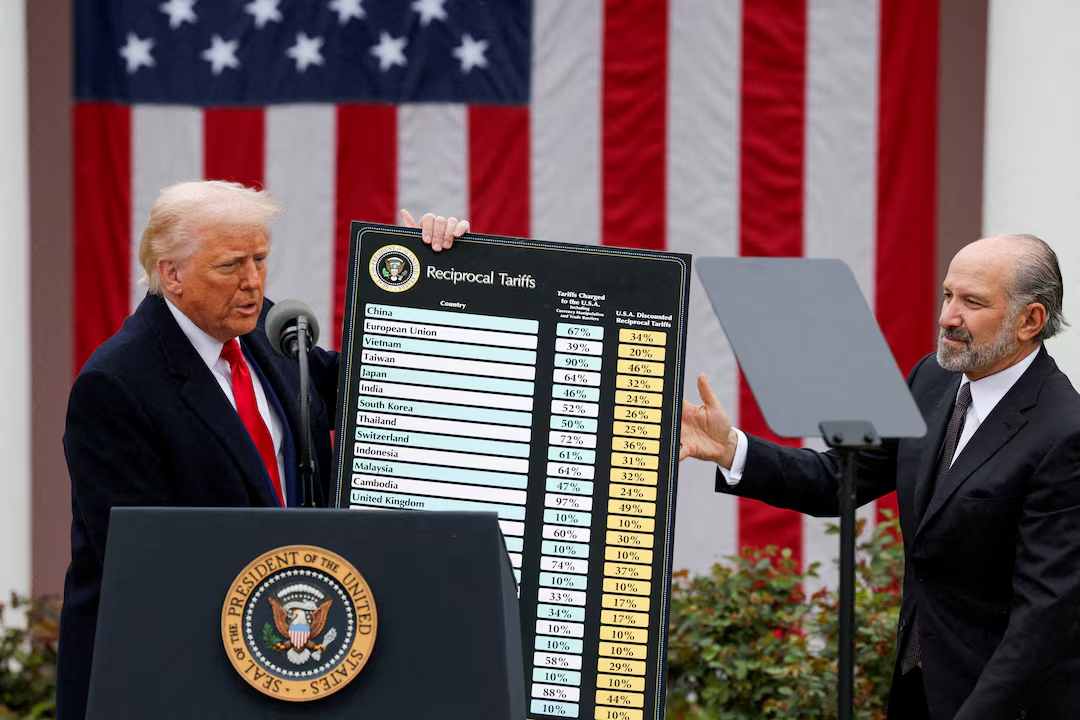
The Supreme Court’s 6-3 ruling on Friday voided most tariffs Trump imposed last year. The court found that the emergency law he relied upon did not authorize tariff imposition. In response, Trump announced first a 10%, then a 15%, global levy using a different statute. This temporary measure could last five months while the administration searches for more durable workarounds. The rapid shift from one legal basis to another exemplifies the volatility now confounding market participants.
Economists Warn of Planning Paralysis
Gregory Daco, chief economist at EY-Parthenon, offered a stark assessment of the current climate. Even if businesses found ways to cope with previous tariffs, the underlying uncertainty never disappeared. “We’ve seen extreme volatility by country and by product. That’s very uncertain still,” Daco explained. He described the situation as impossible for effective planning. “You hear that tariffs are off and you are considering how to get refunds. Then a few hours later it’s 10%. Then it’s 15% the next day.” This lack of a stable framework, he argued, proves hurtful for activity, hiring, and investment.
The sense that confusion had begun to lift was previously widespread. U.S. Federal Reserve policymakers, for example, had grown comfortable that tariff-related inflation pressures would ease. That may still prove accurate, but the situation has become significantly more fluid. The administration now examines different tariff strategies that could take months to implement. Each potential approach will likely face legal challenges at various turns, prolonging the period of tariff uncertainty.
Short-Term Relief, Long-Term Questions
Import tax rates could actually drop in the short term following the court ruling. However, they might then rise again over an uncertain timeline as Trump pursues alternative legal pathways. The administration may need to use different laws requiring separate investigations or even Congressional action. This procedural complexity introduces additional layers of unpredictability for businesses monitoring trade policy developments.
Justice Neil Gorsuch addressed the value of procedural safeguards in his opinion supporting the court’s majority. He argued that proposals surviving the legislative process “must earn such broad support…they tend to endure.” This stability allows “ordinary people to plan their lives in ways they cannot when the rules shift from day to day.” The observation directly speaks to the current predicament facing importers and exporters navigating shifting requirements.
Bullish Outlook Faces New Headwinds
The economic fallout from the Supreme Court ruling arrives during a period of largely bullish sentiment. A recent National Association for Business Economics poll found nearly 60% of economists do not expect a recession for at least a year. This marks an increase from 44% in August. Additionally, 74% believe AI technology will at least moderately increase productivity growth over the next three to five years. These factors suggest underlying economic resilience despite the policy turbulence.
Nevertheless, the renewed tariff uncertainty may still impact growth in coming months. Bernard Yaros, lead U.S. economist for Oxford Economics, analyzed the situation following the Supreme Court decision. He estimated the effective tariff rate would fall from 12.7% to 8.3% after excluding invalidated levies. However, Trump’s proposed 15% across-the-board levy complicates this picture. It remains unclear whether this new rate applies to countries with separate bilateral deals. The five-month temporary window adds another layer of complexity.
Prolonged Uncertainty Offsets Potential Gains
Yaros warned that any economic boost from lower short-term tariffs will likely face partial offset. Prolonged tariff uncertainty could undermine positive effects. “Even if the administration replicates the overall level of tariffs using other means, the by-sector and by-country implications could end up looking quite different,” he explained. This will create another bout of trade policy uncertainty for businesses, investors, and households alike. The situation forces continuous reassessment of strategies across the economy.
Federal Reserve officials frequently mentioned the value of certainty throughout last year. They noted that rapid shifts around trade, immigration, and other policies made economic reading difficult. These shifts appeared to push businesses to the sidelines on hiring and investment decisions. The current environment threatens to reproduce those dynamics, potentially dampening economic activity even as fundamentals remain relatively strong.
Global Implications Remain Significant
The ripple effects extend well beyond U.S. borders. International trading partners must now adjust their own planning amid shifting American trade policy. The European Union, China, and other major economies face difficult decisions about retaliation versus negotiation. Each choice carries implications for global supply chains that have already endured years of disruption. The path forward remains unclear as all parties await greater clarity from Washington.
For now, businesses must operate without the stable framework they desperately need. The coming weeks will reveal whether the administration can develop legally sound, durable tariff policies. Until then, the economic fog continues to thicken, obscuring the path ahead for companies and workers across the United States and around the world.