For five years, four different Starbucks CEOs have pointed to the same problem: stores often run out of basics like milk, pastries, and cup lids. Now, CEO Brian Niccol has made fixing these Starbucks supply chain issues a top priority in his turnaround plan. Yet despite new hires, AI tools, and system upgrades, progress remains slow.
According to interviews with 10 current and former corporate employees—including senior managers—the root causes run deep. Outdated technology, a fragmented supplier network, and poor coordination continue to disrupt deliveries. Even Starbucks’ latest AI-powered inventory tool, called “automated counting,” frequently misidentifies items. Baristas report it confuses similar milk types or misses products entirely. One internal video shows the app failing to detect a peppermint syrup bottle while scanning nearby items.
The company claims the tool—developed by startup NomadGo—is “99% accurate” and improving product availability. But store workers say real-world performance falls short. Meanwhile, Reuters reviewed photos showing excessive shipments of seasonal food items, leading to waste. In September 2025, one barista in Connecticut tossed three garbage bags of unsold food—the most in his 13 years at Starbucks.
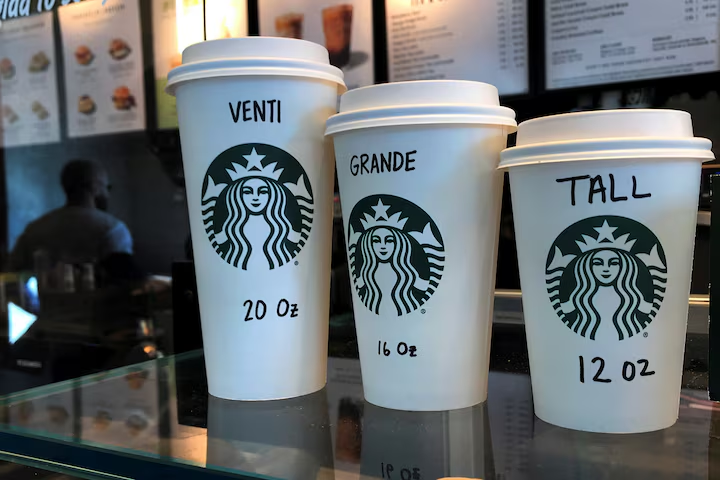
These problems stem from long-standing structural flaws. Unlike competitors, Starbucks relies on hundreds of small, regional food vendors. This makes scaling production during demand spikes difficult. The company also uses 1,500 different cup-and-lid combinations from various suppliers, preventing standardized packaging needed for reliable automated inventory systems—unlike in China, where Starbucks uses uniform designs.
Adding to the strain is aging technology. Starbucks still runs parts of its supply chain on IBM AS/400 systems—hardware first deployed in the 1990s. Though the company says it’s replacing these platforms, insiders compare the upgrade to “changing an airplane’s engine mid-flight.”
Past CEOs tried and failed to fix the system. Kevin Johnson cited pandemic-related disruptions in 2021. Laxman Narasimhan later launched an “automated ordering” program with tech firm o9 Solutions to predict store needs. But the system often ordered too little. His follow-up “Never-Out” initiative—testing larger shipments—was scrapped just eight weeks before he was replaced by Niccol in late 2024.
Niccol has since given store managers more control over orders and updated the mobile app to show real-time shortages. He also hired Amazon grocery veteran Anand Varadarajan as CTO. Still, independent consultant Brittain Ladd calls these efforts “a band-aid.” He argues Starbucks needs a full supply chain overhaul—not just smarter counting.
The stakes are high. Starbucks stores have minimal backroom space, and their perishable food items leave little room for error. Food now makes up 23% of revenue—up from 15% in 2005—but the supply chain wasn’t built for this shift. When forecasting fails, stores either run empty or drown in excess. Both outcomes hurt customers and margins.
Supply chain experts say reliable delivery means getting the right products, on time, at least 95% of the time. But in early 2024, fewer than one-third of truck deliveries to Starbucks distribution centers met that standard. Employees blame poor supplier coordination—and say problems persisted into late 2025.
As Niccol prepares to unveil his full strategy to investors, the message is clear: solving Starbucks supply chain issues won’t happen overnight. Until then, baristas will keep juggling empty shelves, glitchy apps, and mountains of wasted food—while customers wonder why their favorite sandwich is suddenly off the menu.
READ: Trump Administration Delays Student Loan Wage Garnishment