Elon Musk’s Tesla, long considered the undisputed leader in the electric vehicle (EV) market, has officially lost its top spot to Chinese automaker BYD. With a combination of waning demand in its domestic market and fierce competition abroad, Tesla has found itself overshadowed in the EV race. Despite pushing the boundaries of innovation and redefining the future of transportation, Tesla’s fortunes have taken a downturn. In this article, we’ll explore how Tesla’s decline in sales, coupled with BYD’s rise, signals a shift in the global electric vehicle market.
Tesla’s Struggles in 2025:
Tesla’s once-dominant position in the electric vehicle market has been shaken. The company delivered 1.64 million vehicles in 2025, a significant decrease from the previous year, and a far cry from the 2.26 million vehicles delivered by BYD. Tesla’s struggle to maintain its leadership in the global EV race can be attributed to several factors.
- Decreased Demand and Rising Competition:
Tesla’s sales have been hit by a cooling demand in the U.S., Tesla’s home turf, where EV adoption is slowing down. As the market for electric vehicles matures, the once-exponential growth has tapered, especially in the face of increasing competition from international manufacturers like BYD. In addition, Tesla’s vehicles are becoming less desirable compared to the influx of new entrants offering fresh designs, advanced technology, and more affordable price points. - The Impact of Musk’s Political Stance:
One of the most significant blows to Tesla’s brand came from Elon Musk’s involvement with the Trump administration. His appointment to lead the Department of Government Efficiency alienated many of Tesla’s left-leaning consumers who were initially drawn to the brand for its environmental values. With protests erupting and high-profile customers selling their Teslas, the company’s reputation took a major hit. While Musk stepped down from his political role, the damage to Tesla’s image had already been done, with many customers hesitant to associate with the company going forward. - Slower Innovation and the Rise of BYD:
Tesla’s inability to introduce groundbreaking new models at the same pace as its competitors is another factor in the company’s decline. While the Model 3 and Model Y were once groundbreaking, they are now showing signs of aging. In contrast, BYD, backed by a strong innovation pipeline, has gained a strong foothold in global markets, offering premium vehicles at competitive price points. This has allowed BYD to build a loyal customer base, particularly in markets like China, where it has surpassed Tesla in both sales and market share.
BYD: The New King of EVs:
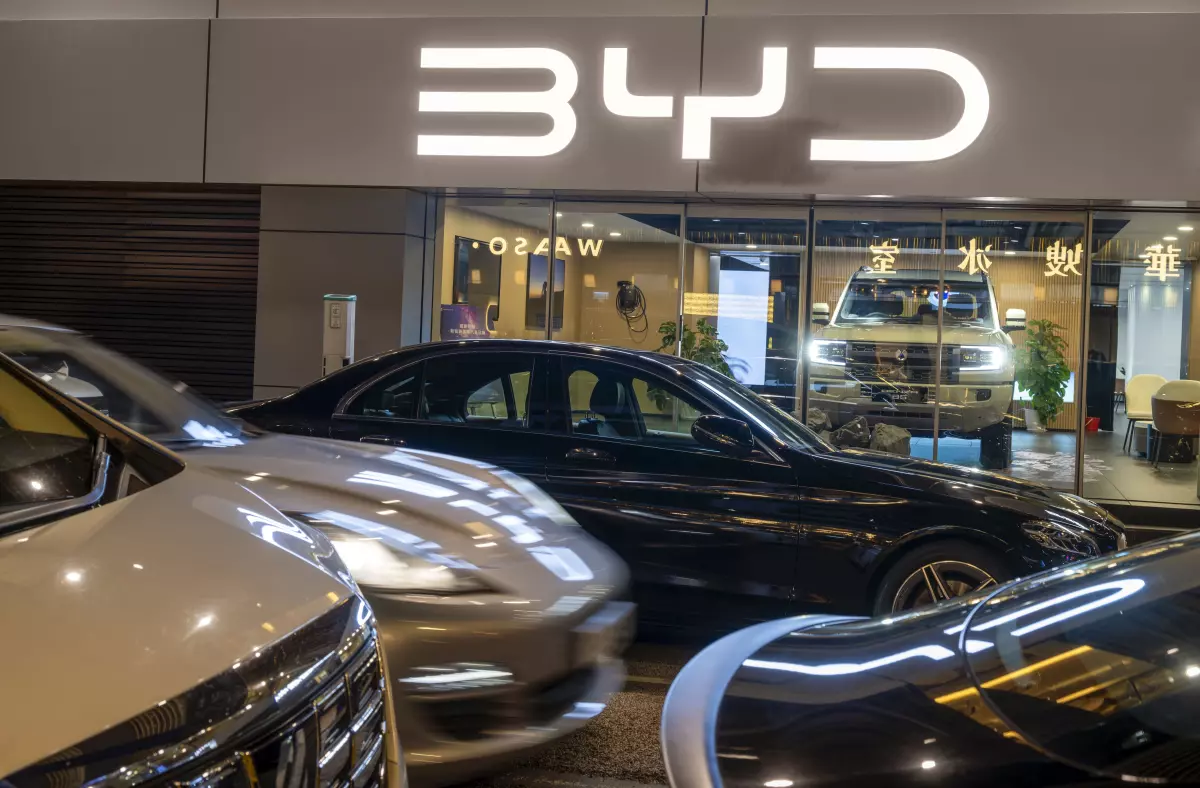
In 2025, BYD made a bold statement in the EV industry, surpassing Tesla in sales for the first time. The Chinese company, which has been rapidly scaling up its production and expanding its global reach, reported 2.26 million deliveries. This marks a shift in the EV market, where Chinese automakers, including BYD, are leading the charge with a more affordable and diverse range of vehicles.
- Aggressive Global Expansion:
BYD has capitalized on the growing demand for electric vehicles in emerging markets, including Europe and Latin America. In addition to ramping up production, BYD has made strategic investments in infrastructure, including battery manufacturing and charging networks, further cementing its leadership in the EV space. Despite facing steep tariffs on Chinese-made cars, BYD’s vehicles have made significant inroads in markets outside of China, outpacing Tesla’s deliveries. - Focus on Affordability and Quality:
While Tesla has struggled with price sensitivity in the U.S. market, BYD has emerged as a more affordable alternative. By providing a wide array of electric vehicles—from compact city cars to larger SUVs—BYD has been able to meet the needs of a diverse consumer base. With models like the BYD Atto 3 and BYD Tang offering comparable performance and quality at a lower price point than Tesla, the company has positioned itself as a leader in both the economy and premium EV segments.
Tesla’s Future: Shifting Focus to AI and Robotics:
While Tesla grapples with declining sales and market share, Elon Musk remains focused on future technologies, particularly robotics and artificial intelligence. In a bid to remain relevant, Tesla has shifted its attention away from traditional vehicle production and towards autonomous driving technology and robotics, including the ambitious development of humanoid robots and the launch of robotaxi services.
- Investors’ Optimism in Tesla’s Long-Term Vision:
Despite the short-term challenges, investors remain optimistic about Tesla’s long-term prospects. The company’s stock has seen growth, driven by Musk’s promises to revolutionize the autonomous driving and robotics industries. If Tesla can successfully roll out robotaxis and humanoid robots, it could open up new revenue streams and make the company a dominant player in the future of transportation. - Challenges in Autonomous Driving:
However, Tesla faces significant hurdles in catching up with competitors in the autonomous driving space. Companies like Waymo have already established a foothold in autonomous ride-hailing, and Tesla’s own robotaxi rollout has experienced glitches. Despite these challenges, investors continue to back Musk’s vision, hoping that he can turn Tesla into an AI and robotics powerhouse.