Trump administration officials defended a decision to temporarily lift some Russian oil sanctions Sunday, arguing the move would ease global market pressure. Energy Secretary Chris Wright and UN Ambassador Mike Waltz appeared on multiple television talk shows to explain the waiver. The Russian oil sanctions relief allows Indian purchases for 30 days. Waltz described the policy as “common sense” on NBC’s “Meet the Press.” He noted that millions of barrels of oil sitting on ships can now reach Indian refineries.
The Russian oil sanctions waiver comes as the Iran war enters its second week. Americans face rising gasoline prices, with the national average reaching $3.32 per gallon Friday. That represents an 11 percent increase from the previous week and the highest level since September 2024. Diesel prices surged 15 percent to $4.33 per gallon, the highest since November 2023. The price spikes occur against a backdrop of unexpected job losses, with the economy shedding 92,000 positions in February.
Fear Driving Prices
Wright blamed price increases on market psychology rather than actual supply shortages. He told CNN’s “State of the Union” that the Russian oil sanctions waiver can help “tamp this fear of shortage of oil, tamp the price spikes and the concerns we see in the marketplace.” The energy secretary emphasized that no shortage of oil or natural gas currently exists. He attributed rising costs to “fear and perception” that the Iran operation will become a drawn-out affair.
Wright expressed confidence that the conflict would remain limited. “But it won’t be,” he said on “Fox News Sunday,” echoing Trump’s prediction of weeks rather than months of warfare. Despite these assurances, US crude futures surged more than 20 percent in early Asian trading Monday. Prices hit their highest level since July 2022 as the expanding war fueled fears of prolonged disruptions through the Strait of Hormuz.
Strategic Reserve Debate
Senate Minority Leader Chuck Schumer called on Trump to sell oil from the Strategic Petroleum Reserve. The reserve currently holds about 415 million barrels, more than the entire world uses in four days. Schumer argued that releasing reserves would stabilize markets and bring prices down. “Trump should release oil from the SPR now to stop the price shock that American families are already feeling thanks to his reckless war,” the New York Democrat said.
The Energy Department did not immediately respond to a request for comment on Schumer’s proposal. Trump told Reuters on Thursday that he was not looking to tap the strategic reserve. This position sets up potential conflict with Democrats seeking immediate relief for consumers. The Russian oil sanctions waiver represents an alternative approach to managing supply concerns without tapping emergency stocks.
Political Fallout
Political analysts warn that persistent gasoline price increases could hurt Republicans in November midterm elections. Control of Congress hangs in the balance as voters assess economic conditions. A Reuters/Ipsos poll last month found most respondents rejected Trump’s characterization of the economy as “booming.” The Russian oil sanctions waiver may help blunt criticism but unlikely eliminates political liability entirely.
Senator John Kennedy, a Louisiana Republican, directed criticism at energy speculators rather than administration policy. “The oil prices have gone up because you’ve got a bunch of oil traders out there in their Gucci loafers, with their caramel Frappuccinos who are bidding up the price,” Kennedy said on “Fox News Sunday.” His comments reflect GOP efforts to deflect blame from Trump administration decisions.
Trump Defends Strategy
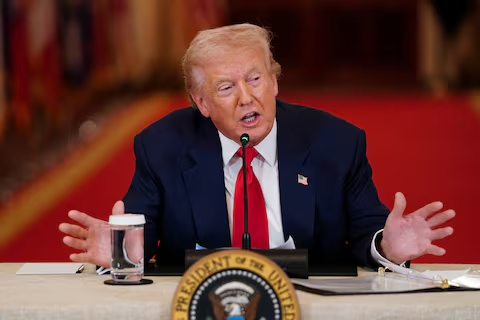
President Trump addressed the situation Sunday night on Truth Social. He characterized short-term oil price increases as acceptable given larger strategic objectives. “Short term oil prices, which will drop rapidly when the destruction of the Iran nuclear threat is over, is a very small price to pay for U.S.A., and World, Safety and Peace,” Trump wrote. He added emphatically: “ONLY FOOLS WOULD THINK DIFFERENTLY!”
The Russian oil sanctions waiver forms part of broader energy strategy during the Iran conflict. By allowing Indian purchases, the administration aims to maintain global supply flows while keeping pressure on Iranian targets. Whether this approach successfully moderates price increases remains uncertain. Market reactions suggest continued anxiety despite administration assurances.
International Dimensions
India’s role as a purchaser of Russian oil carries geopolitical significance. The waiver maintains India’s ability to access discounted Russian crude while US allies coordinate responses to the Iran conflict. This arrangement balances multiple diplomatic objectives against domestic political concerns about gasoline prices. The Russian oil sanctions waiver demonstrates the complexity of managing energy policy during active military operations.
Global markets watch these developments closely. Any sustained disruption to Strait of Hormuz shipping would affect far more than Russian oil flows. Approximately 20 percent of global oil passes through this strategic chokepoint. The Russian oil sanctions waiver addresses only one piece of a much larger energy puzzle.
Outlook
Wright’s prediction of weeks-long price spikes will face testing in coming days. If conflict expands or draws in additional actors, market fears could intensify regardless of administration messaging. The Russian oil sanctions waiver provides some supply-side relief but cannot address all potential disruptions. Gasoline prices will likely remain elevated as long as military operations continue.
For American consumers, the combination of rising fuel costs and weakening employment creates financial stress. The Russian oil sanctions waiver may offer marginal relief but unlikely returns prices to pre-conflict levels quickly. November elections will test whether voters blame Republicans for these conditions or accept administration arguments about necessary short-term costs for long-term security.