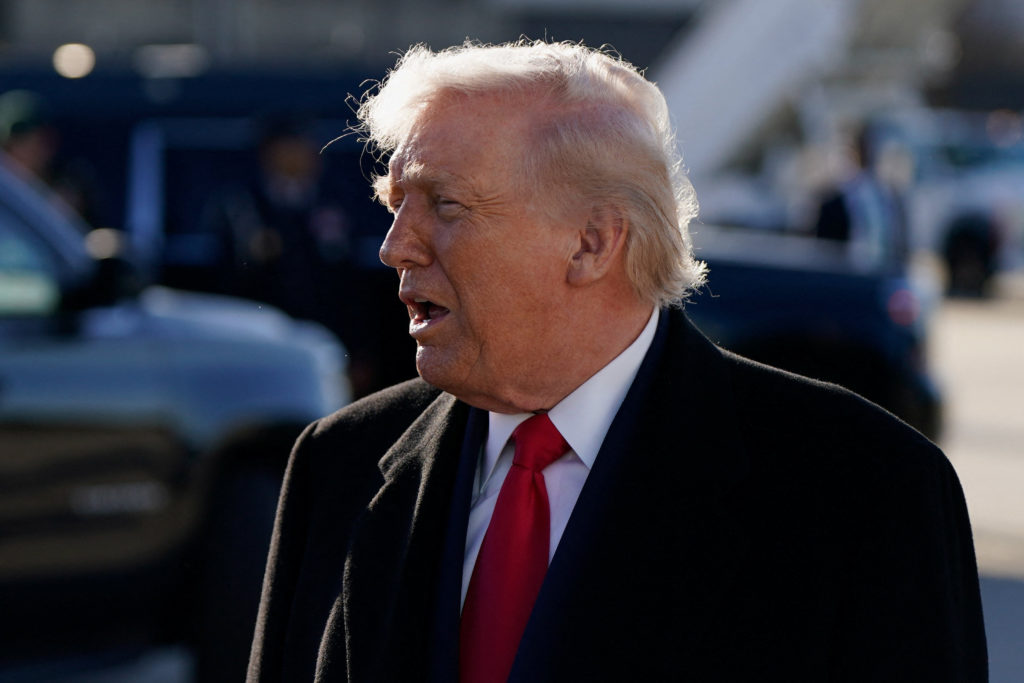
The Trump Newsom UK clean energy deal has drawn sharp criticism from the former president during a recent POLITICO interview. Consequently, Trump derided California Governor Gavin Newsom with his trademark nickname, calling him a “loser” whose state is “going to hell.” Moreover, he characterized Newsom’s environmental efforts as a “disaster” while questioning the appropriateness of both the governor signing the agreement and the United Kingdom engaging with him. Indeed, these remarks highlight growing tensions between federal and state approaches to climate policy.
Furthermore, the Trump Newsom UK clean energy deal was formalized in London through a memorandum of understanding with U.K. Energy Secretary Ed Miliband. Specifically, this agreement promotes cooperation on clean energy technologies including offshore wind development. Therefore, it expands market access for British companies like Octopus Energy within California. Moreover, the pact enhances collaboration between research institutions across the Atlantic. As a result, these initiatives aim to accelerate clean energy deployment while creating economic opportunities on both sides. Indeed, such state-level diplomacy reflects California’s commitment to climate action despite federal policy shifts.
In addition, the Trump Newsom UK clean energy deal emerges as Newsom tours Europe to reassure international allies. Consequently, he seeks to characterize Trump’s disruptions to transatlantic relations and U.S. climate policy as “temporary.” Furthermore, this diplomatic effort gains significance after the Trump administration withdrew the United States from the United Nations Framework Convention on Climate Change. Therefore, California and the U.K. maintain shared commitments to net-zero emissions targets. Moreover, Newsom’s positioning as a likely 2028 Democratic presidential contender adds political dimension to these international engagements. Indeed, state-level climate leadership can influence national and global policy trajectories.
Additionally, Trump’s criticism of the Trump Newsom UK clean energy deal extends to California’s infrastructure record. Specifically, he cited the state’s delayed high-speed rail project as evidence of management challenges. Therefore, he warned that replicating California’s issues in the U.K. would constitute a “very unsuccessful venture.” Moreover, these comments reflect broader debates about effective climate policy implementation. Consequently, stakeholders must weigh ambitious environmental goals against practical execution capabilities. Indeed, successful clean energy transitions require both vision and operational excellence.
The British Embassy responded to controversy surrounding the Trump Newsom UK clean energy deal by emphasizing enduring partnership values. Specifically, a spokesperson noted that U.S.-U.K. relations “remain a cornerstone of our security and prosperity.” Therefore, the clean energy memorandum represents one component within a broader series of state-level agreements. Moreover, these collaborations aim to create jobs and foster economic growth in the United Kingdom. As a result, bilateral cooperation continues despite federal-level political tensions. Indeed, subnational diplomacy can advance shared interests even during periods of national disagreement.
Furthermore, the Trump Newsom UK clean energy deal illustrates evolving dynamics in climate governance. Consequently, states and international partners increasingly pursue direct cooperation when federal policies diverge from their priorities. Therefore, California’s independent climate diplomacy demonstrates how subnational actors can shape global environmental outcomes. Moreover, this approach allows for policy innovation and knowledge sharing across jurisdictions. As a result, successful initiatives may influence broader adoption of effective practices. Indeed, multi-level governance structures offer flexibility in addressing complex challenges like climate change.
Looking ahead, the trajectory of the Trump Newsom UK clean energy deal will depend on multiple factors. Specifically, implementation progress, technological advancements, and political developments will all influence outcomes. Therefore, stakeholders must maintain adaptive strategies to navigate changing circumstances. Moreover, transparent communication about goals and achievements helps build public support for clean energy initiatives. Consequently, measuring and sharing results strengthens accountability and encourages continued investment. Indeed, sustained collaboration can deliver meaningful emissions reductions while generating economic benefits.
For observers of U.S. climate policy, the Trump Newsom UK clean energy deal offers important insights. Furthermore, it demonstrates how state leaders can pursue international partnerships despite federal opposition. Therefore, California’s approach may inspire similar efforts by other states committed to climate action. Moreover, these initiatives highlight the growing importance of subnational diplomacy in global environmental governance. Consequently, understanding these dynamics helps stakeholders anticipate future policy developments. Indeed, flexible, multi-level approaches can enhance resilience in climate policy implementation.
In summary, the Trump Newsom UK clean energy deal represents a significant example of state-level climate diplomacy. Consequently, it advances clean energy cooperation between California and the United Kingdom despite federal political tensions. Furthermore, this initiative reflects broader trends toward subnational leadership in addressing global challenges. Therefore, stakeholders should monitor implementation progress and potential replication in other jurisdictions. Moreover, balancing ambitious environmental goals with practical execution remains essential for long-term success. Indeed, collaborative approaches that engage multiple levels of government can accelerate the transition to sustainable energy systems. As a result, the Trump Newsom UK clean energy deal may contribute meaningfully to both regional and global climate objectives.