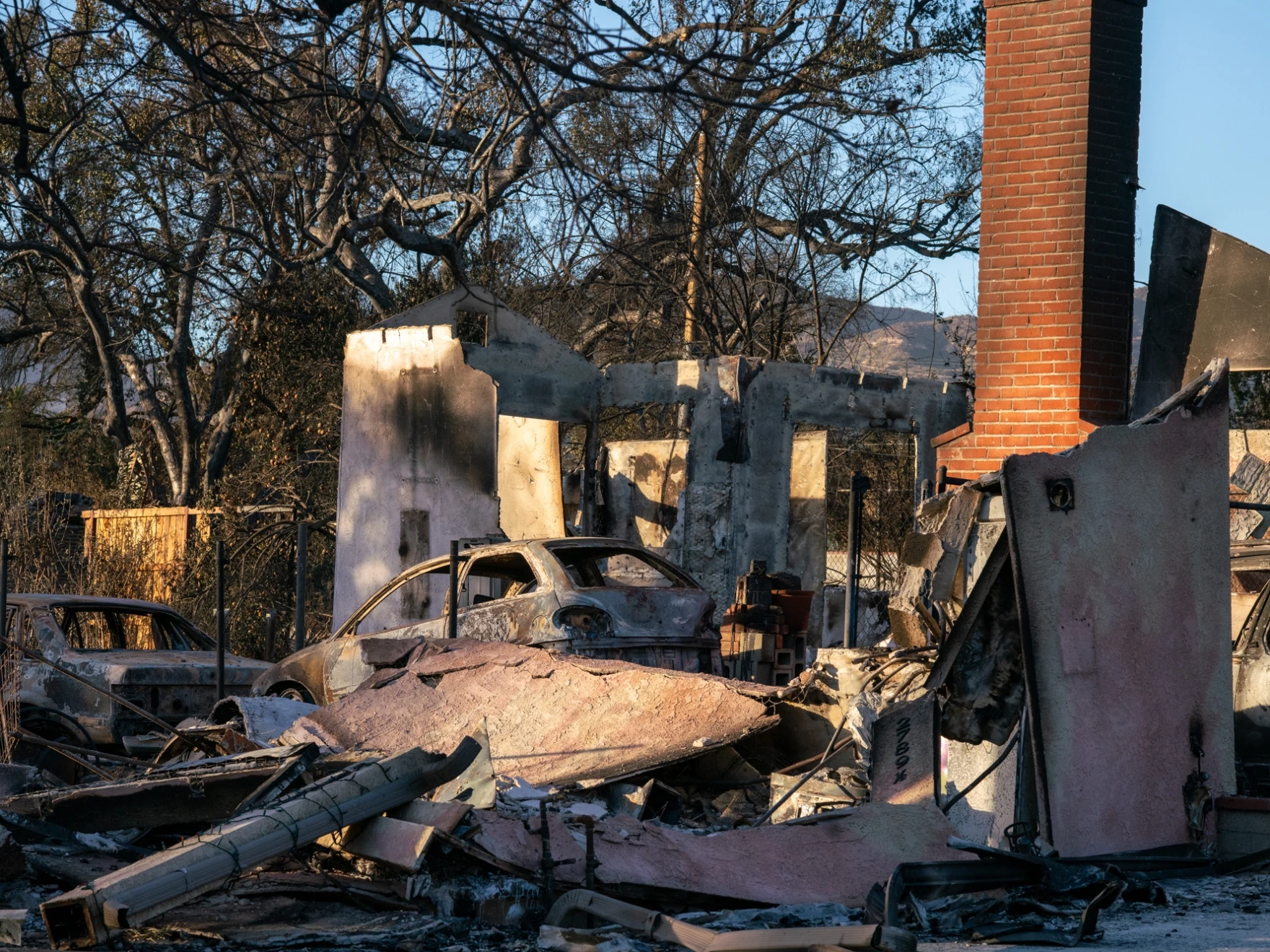
Mark Johnson watched his southern California home burn in last January’s wildfires. Nine months later, he still hadn’t received payment on his State Farm insurance claims. Desperate to rebuild, he asked the company in October to settle quickly. “I was on the verge of leaving money on the table,” Johnson recalls, “just to get some kind of assurance.”
Then, just before Thanksgiving, a State Farm representative told him the check was coming. “Needless to say, it was a huge relief,” he says, fighting back tears.
Johnson isn’t alone. As California’s largest home insurer, State Farm has drawn sharp criticism for how it handled State Farm insurance claims after the Eaton and Palisades fires. Those blazes destroyed more than 16,000 structures around Los Angeles and caused an estimated $40 billion in insured losses—the costliest wildfires in global history, according to Swiss Re Institute.
Many homeowners only started receiving checks in November—months after the fires—after Los Angeles County launched an investigation into complaints about delayed, denied, or underpaid claims. Joy Chen, executive director of the Eaton Fire Survivors Network, says the timing lines up. “Around February or March, I realized that whether a family recovered often depended on their insurer,” she says. “These people paid premiums faithfully for 20 or 30 years—but only some got the coverage they expected.”
For those with State Farm insurance claims, the wait has been exhausting. Families bounced between rentals. Others took on tens of thousands in debt. Andrew Wessels of Altadena says State Farm refused for months to replace lead-contaminated belongings like bedding and clothes, insisting cleaning would suffice. A year after the fire, he still didn’t know how much the company would pay to clean toxic ash from his home—work that may require tearing out walls and floorboards. “We’re here almost a year later, and we haven’t taken one step forward,” he said in December.
The challenge grows even harder for homes that survived but suffered smoke and toxin damage. “With total loss, the path is clear,” says Krista Copelan, another State Farm customer. “But we have no clear answers. It’s 100% fighting every step of the way.”
A recent report by Department of Angels, a nonprofit aiding fire victims, shows 65% of Altadena residents remain in temporary housing. In Pacific Palisades, nearly 75% still live displaced. About half of surveyed survivors say they’ve drained most or all of their savings. Many also report serious mental health struggles. “Everyone has been overwhelmed and drained for literally the past 11 months,” Copelan said.
Criticism of State Farm insurance claims extends beyond California. In Oklahoma, Attorney General Gentner Drummond accused the company of systematically lowballing storm damage payouts. In Texas, lawmakers call the practice “extraction”—collecting premiums while denying coverage when disaster hits. A Florida realtor put it bluntly: “You pay for 30 or 40 years, and when you need help, they don’t want to pay what you actually need.”
Insurers argue they face rising costs from climate-driven disasters, inflation, and fraud. David Sampson of the American Property Casualty Insurance Association says companies have already paid “tens of billions” to fire victims. Still, many policyholders feel betrayed.
Johnson hopes to move back into his rebuilt Altadena home by fall. He wonders if State Farm simply got overwhelmed—or if the delays were intentional. “They’re just trying to push you away,” he says. “They make it so hard that you’ll settle for less.”
As wildfires, storms, and floods grow more frequent and severe, the gap between what policyholders expect and what insurers deliver keeps widening—leaving families like Johnson’s stranded in limbo.