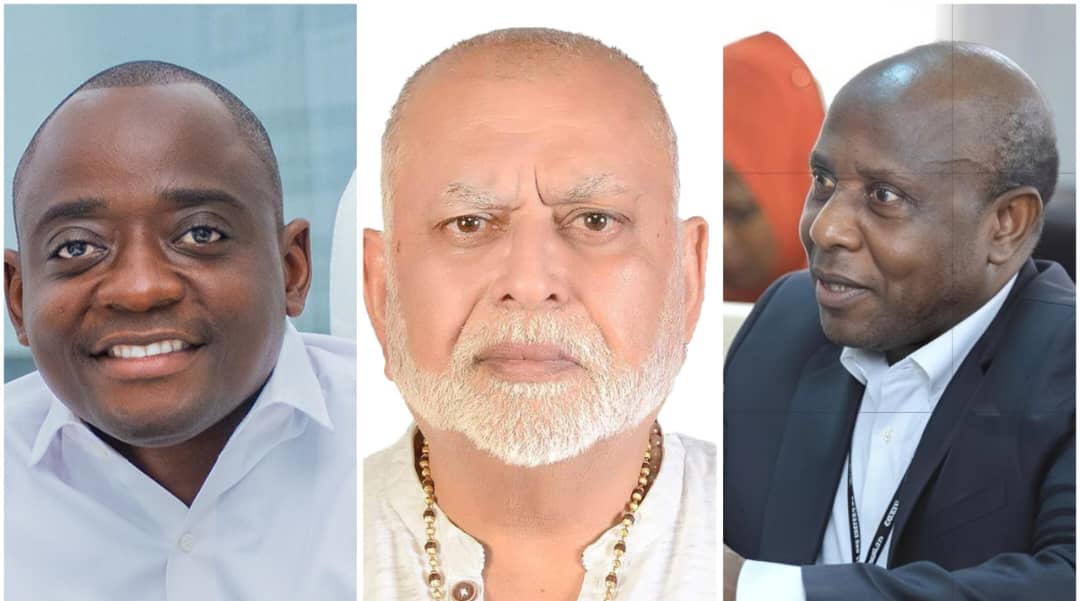
Uganda’s billionaire rankings in 2026 reflect more than personal wealth. They reveal the structure of capital in a frontier economy where private assets dominate and public equity remains limited. Collectively, the country’s top 15 fortunes account for an estimated 10.3 billion dollars. In a 65 billion dollar economy, that concentration is substantial.
Unlike developed markets where stock exchanges anchor wealth formation, Uganda’s billionaire rankings are shaped largely by control of commercial real estate, petroleum distribution, manufacturing and telecommunications-linked equity exposure. Consequently, tangible asset ownership, rather than diversified financial portfolios, defines the hierarchy of economic power.
At the same time, per capita income remains modest and a significant share of economic participation is informal. Therefore, the rise of ultra-high-net-worth individuals highlights a widening distinction between capital ownership and wage-based income.
Below is a structured overview of the leading figures shaping Uganda’s billionaire rankings in 2026. All figures are indicative estimates derived from asset-based valuation models and publicly verifiable holdings.
Hamis Kiggundu – ~US$1.35 Billion
At the top of Uganda’s billionaire rankings stands Hamis Kiggundu. His wealth is primarily anchored in high-density commercial real estate across Kampala. Through successive development cycles, he has reinvested rental income into mixed-use towers, retail complexes and large-scale urban projects.
Moreover, strategic land banking enhances long-term appreciation potential. Beverage manufacturing operations and fintech participation through Hamz Pay introduce diversification beyond property. International holdings reportedly add currency and geographic balance. As a result, his capital structure blends domestic asset dominance with incremental industrial and digital exposure.
Sudhir Ruparelia – ~US$1.2 Billion
Sudhir Ruparelia ranks close behind, presiding over one of the country’s most diversified conglomerates. His holdings span commercial property, hospitality, education, insurance and floriculture exports.
While real estate anchors long-term asset value, hospitality assets such as Speke Resort Munyonyo generate operating revenue tied to tourism demand. Meanwhile, insurance and education offer steady institutional cash flow. Therefore, his wealth model combines cyclical exposure with predictable income streams.
John Bosco Muwonge – ~US$850 Million+
John Bosco Muwonge represents a concentrated property model within Uganda’s billionaire rankings. His arcades and commercial buildings in central Kampala generate recurring rental income tied to retail density and prime location scarcity.
Because inner-city land remains structurally limited, tenant turnover and occupancy rates directly shape valuation performance.
Drake Lubega – ~US$800 Million+
Through Jesco Industries Limited, Drake Lubega has accumulated a substantial portfolio of arcades and mixed-use buildings in Kampala’s busiest trading corridors.
Although he holds industrial and education-linked assets, commercial real estate remains the core driver of his net worth. Consequently, retail demand cycles and occupancy stability remain key valuation factors.
Mansour Matovu – ~US$785 Million
Mansour Matovu transitioned from logistics and trading into structured property development. Plazas such as MM Plaza and Jumbo Plaza generate steady rental cash flow.
Therefore, his wealth structure illustrates how early trading capital can evolve into long-term land-backed accumulation in frontier markets.
Karim Hirji – ~US$785 Million+
Karim Hirji’s portfolio blends hospitality, automotive distribution and commercial property. The Imperial Hotels Group positions him within Uganda’s tourism and conference economy.
However, tourism cycles can fluctuate. As a result, ownership of prime real estate such as Cham Towers provides stabilizing asset value.
Christine Nabukeera – ~US$710 Million+
Christine Nabukeera’s wealth is concentrated in premium commercial and residential property. Investments such as New Pioneer Mall highlight disciplined land acquisition strategies in high-growth corridors.
Although property markets can move cyclically, infrastructure expansion and urban demand support long-term appreciation.
Tom Kitandwe – ~US$700 Million+
Tom Kitandwe built his capital through extensive commercial property development across Kampala. His holdings generate recurring rental income from high-footfall intersections.
In addition, agribusiness land and telecommunications-linked investments introduce moderate diversification. Nevertheless, real estate remains the dominant valuation anchor.
Guster Lule Ntake – ~US$670 Million+
Guster Lule Ntake’s structure differs from purely rent-driven peers. Hospitality, agriculture and manufacturing combine to produce a diversified income base.
Consequently, his capital model blends service-sector revenue with value-added production and land-backed stability.
Godfrey Kirumira – ~US$615 Million+
Godfrey Kirumira’s wealth originates in petroleum distribution. Fuel retail generates recurring liquidity tied to transport and logistics demand.
To mitigate margin volatility, he has diversified into commercial real estate, hospitality and telecommunications infrastructure. Therefore, his portfolio balances operational turnover with tangible asset preservation.
Charles Mbire – ~US$600 Million+
Charles Mbire represents the equity-linked segment of Uganda’s billionaire rankings. His shareholding in MTN Uganda ties part of his valuation to corporate earnings and dividend policy.
Furthermore, investments in energy and infrastructure broaden sector exposure. As a result, his wealth profile is more market-sensitive than property-dominant peers.
Amos Nzeyi – ~US$550 Million+
Amos Nzeyi’s wealth is industrially anchored through beverage manufacturing and food production. Production scale and consumer demand drive valuation performance.
Hospitality assets and international investments strengthen diversification and long-term resilience.
Ahmed Omar Mandela – ~US$535 Million+
Ahmed Omar Mandela’s vertically integrated model spans petroleum retail, food services and agro-processing. City Oil provides liquidity, while hospitality brands capture urban consumer demand.
Therefore, diversification reduces reliance on a single revenue stream.
Haruna Sentongo – ~US$490 Million+
Haruna Sentongo focuses on redevelopment-driven commercial property in dense trading zones. Tenant turnover and strategic positioning underpin valuation stability.
Patrick Bitature – ~US$220 Million+
Patrick Bitature’s wealth was catalyzed by telecommunications distribution before expanding into energy infrastructure and hospitality. Although infrastructure projects require significant capital, they provide long-term asset-backed exposure.
The Structural Insight
Uganda’s billionaire rankings demonstrate a consistent pattern. Wealth at the top remains anchored in tangible, income-producing assets. Commercial property dominates. Petroleum distribution and manufacturing follow. Equity participation remains selective.
Moreover, access to land, development finance and scale-based distribution networks creates high entry thresholds. Consequently, capital accumulation compounds faster for those controlling physical infrastructure than for wage earners or small enterprises.
As Uganda approaches oil production and deeper digital integration, the architecture of private capital may gradually evolve. However, in 2026, the country’s billionaire rankings still reflect a frontier market reality in which ownership of land and strategic distribution assets defines economic leadership.
READ: Tesla Sues California DMV Over Autopilot and FSD Brand Labels