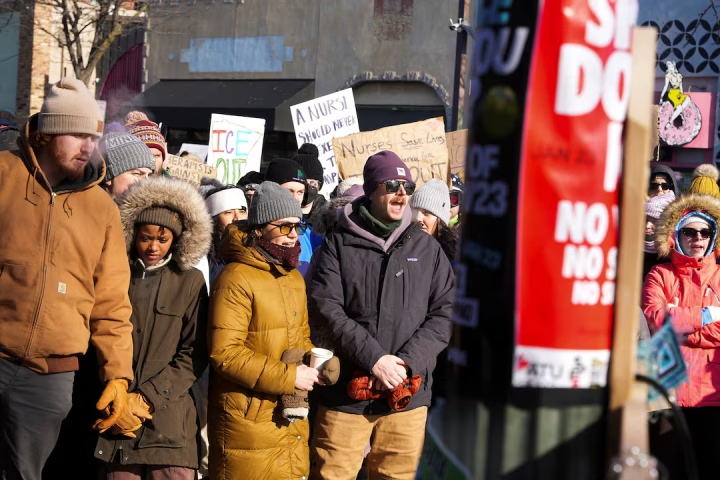
Target’s incoming chief executive has addressed the recent violence in the company’s hometown, calling the situation “incredibly painful.” Michael Fiddelke, who becomes CEO on February 1, spoke to employees in a video message following the second fatal shooting of a protester by federal agents in Minneapolis. The Target incoming CEO acknowledged the profound impact on the community and the retailer’s workforce. Fiddelke stated the events affect people not just as a company but as neighbors and family members. His remarks come as Target and other major Minnesota corporations break a period of relative silence. Over 60 local CEOs, including Target’s, have now signed an open letter urging officials to de-escalate tensions, though without directly mentioning the shootings or President Trump.
Fiddelke’s Statement to Employees
In his video address, the Target incoming CEO focused on the human toll within the community. “As someone who is raising a family here in the Twin Cities and as a leader of this hometown company, I want to acknowledge where we are,” Fiddelke said. He continued, “The violence and loss of life in our community is incredibly painful. What’s happening affects us not just as a company, but as people, as neighbors, friends and family members within Target.” He did not specifically reference the deaths of protesters Alex Pretti and Renee Good, who were killed by Immigration and Customs Enforcement agents. Furthermore, he avoided mentioning President Donald Trump or announcing any policy shifts. Instead, he emphasized the company’s focus on controlling what it can, prioritizing the safety of team members and guests above all else.
Corporate Silence and Subsequent Action
For weeks, Target and other major Minnesota corporations largely avoided public comment on the federal immigration enforcement surge and its violent consequences. This hesitation stemmed from widespread fear of retaliation or customer boycotts in a politically polarized climate. The Trump administration has vigorously defended its operations, deploying additional agents despite polling showing most Americans prefer tactics that minimize harm. The corporate stance shifted significantly following the second killing. On Sunday, more than sixty Minnesota-based CEOs, including leaders from Target, Best Buy, and UnitedHealth Group, signed an open letter. The letter urged officials to “immediately de-escalate tensions” in Minneapolis but carefully omitted direct reference to the shootings, ICE, or the president. This coordinated action marks a cautious but notable step into a fraught political arena.
Target’s Direct Connection to ICE Incidents
The retailer has found itself indirectly involved in the enforcement operations, drawing public scrutiny. One high-profile ICE incident occurred at a Target store in the Minneapolis suburb of Richfield, where two U.S. citizens were detained. This event triggered protests after it was revealed one detainee was a 17-year-old Target employee. Separately, the company faced criticism for allowing ICE agents to use its store parking lots and restroom facilities. These incidents placed the national retailer at the intersection of commerce, community, and federal policy. The incoming Target CEO must now navigate these complex realities while maintaining operations and protecting the brand’s reputation. The company’s response will be closely watched by employees, customers, and activists on all sides of the debate.
Broader Business Community Pressure
The collective CEO letter represents mounting pressure from the influential Minnesota business community. While carefully worded, the call for de-escalation signals that economic leaders see the instability as a threat to the region’s well-being. Persistent violence and social unrest can disrupt supply chains, deter customer traffic, and complicate employee recruitment and retention. For a retail giant like Target, which maintains its headquarters and a significant store footprint in the area, local stability is directly tied to operational continuity. The business leaders’ intervention adds a powerful, non-partisan voice to calls for calm. However, their avoidance of naming specific causes or actors highlights the delicate balance corporations must strike when addressing politically charged civil unrest.
Leadership Transition Amid Crisis
Michael Fiddelke assumes the role of Target incoming CEO at a uniquely challenging moment. He must guide the company through this local crisis while also executing on broader strategic priorities like digital transformation and inventory management. His immediate task involves stabilizing the internal workforce and reassuring the community of Target’s commitment to its hometown. His measured initial statement reflects a desire to acknowledge pain without escalating political tensions. The approach contrasts with more confrontational corporate activism seen in other sectors. How he navigates the coming weeks will set the tone for his tenure and define Target’s relationship with Minneapolis during a period of profound division. His background as a long-time company insider may provide a deep understanding of the corporate culture and community ties needed in this situation.
Implications for Corporate Social Advocacy
The events in Minneapolis present a case study in modern corporate social responsibility. Companies should increasingly take stands on societal issues, but the risks of alienating significant customer segments are real. Target’s experience shows how local operations can inadvertently entangle a national brand in national political fights. The cautious, community-focused language from the Target incoming CEO and the broader CEO coalition suggests a model of advocacy centered on safety and stability rather than explicit political alignment. This model may become more common as businesses seek to address societal breakdowns impacting their operations without wading into partisan debates. The outcome in Minneapolis will inform how other corporations respond to similar crises in their own headquarters cities.
Target’s incoming CEO has taken a first, empathetic step by acknowledging the deep pain in the company’s community. Michael Fiddelke’s statement and the coordinated CEO letter indicate the business community’s recognition that silence is no longer tenable. However, the carefully circumscribed nature of their comments reveals the extreme caution dominating corporate communications. As the new leader, Fiddelke must now translate this initial acknowledgment into concrete actions that support employees, ensure customer and worker safety, and contribute to community healing. The path forward requires balancing moral leadership with pragmatic business stewardship. The nation will observe how one of America’s largest retailers manages its role as a corporate citizen in a hometown under extraordinary strain.