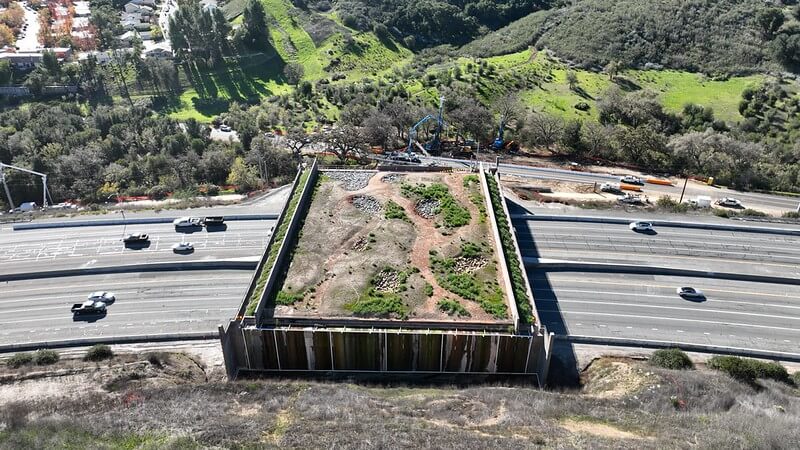
California is on track to complete the Wallis Annenberg Wildlife Crossing by fall 2026—a landmark project that will reconnect fragmented ecosystems across the Santa Monica Mountains. Spanning 200 feet wide, this vegetated overpass will arch over the busy U.S. 101 freeway, creating a safe corridor for wildlife to roam freely.
The final piece of funding recently fell into place when the California Transportation Commission approved $18.8 million from the Environmental Enhancement and Mitigation Program. This allocation completes the project’s budget and is part of a broader $1 billion package supporting transit, highway safety, and climate resilience initiatives across the state.
Importantly, the crossing is a public-private partnership involving state agencies, nonprofits, and major donors. It aims to solve a critical problem: habitat isolation caused by urban infrastructure. Without safe passage, species like mountain lions, deer, and coyotes risk inbreeding, population decline, and deadly collisions with vehicles.
Once finished, the structure will be fully planted with native coastal sage scrub species. It will also link directly to 12 acres of restored open space and integrate roughly 50,000 native plants. As a result, the crossing won’t just function as a bridge—it will become a living extension of the surrounding ecosystem.
Construction began on Earth Day 2022 in a ceremony attended by Governor Gavin Newsom and Wallis Annenberg, the late philanthropist whose vision and generosity helped launch the project. Her legacy lives on in what will be the largest wildlife crossing of its kind in the world.
Beyond reducing roadkill, the Wallis Annenberg Wildlife Crossing supports long-term biodiversity. Genetic diversity among mountain lions alone could improve dramatically, helping prevent local extinction. Moreover, the design blends seamlessly into the landscape, minimizing visual impact while maximizing ecological function.
In short, this project represents more than infrastructure—it’s a commitment to coexistence. By prioritizing nature amid urban growth, California sets a global example in climate-smart, wildlife-friendly planning. And when it opens in 2026, animals—and conservationists—will finally have a safer path forward.
READ: California’s Proposed Wealth Tax Sparks Exodus to Texas