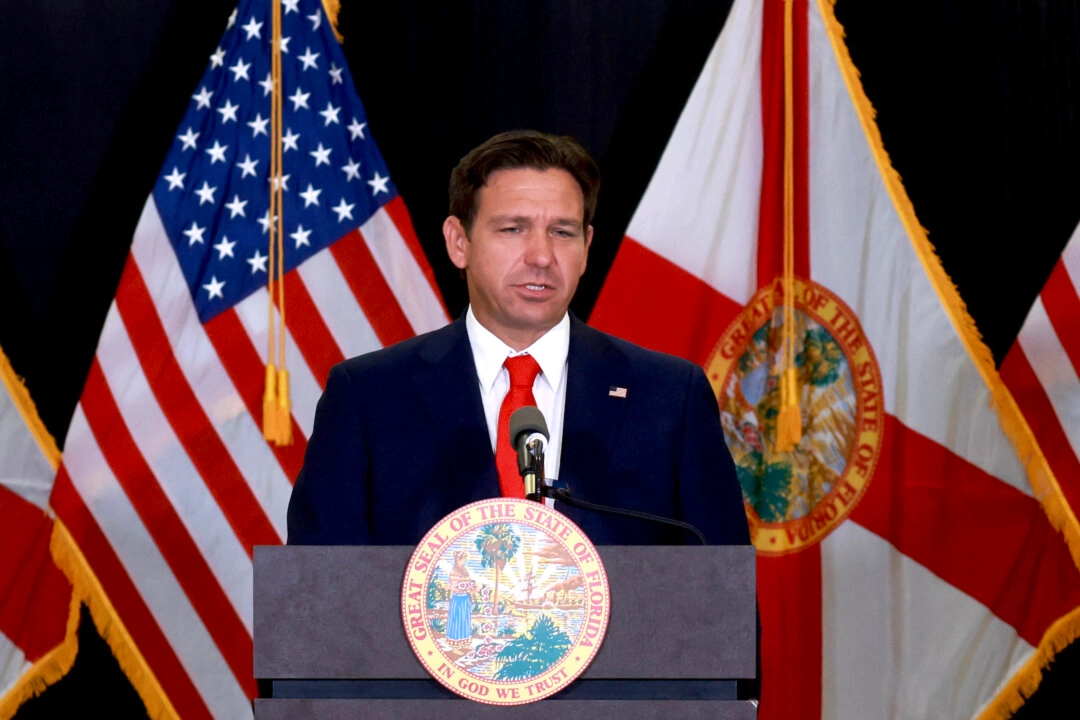
Florida has moved to the center of a growing national redistricting battle after Governor Ron DeSantis announced plans to convene a special legislative session in April to redraw the state’s congressional maps. The decision comes as both major political parties across the United States seek to strengthen their positions ahead of the 2026 midterm elections, where control of the U.S. House of Representatives is expected to be fiercely contested.
The move places Florida alongside several other states that have already entered mid-decade redistricting fights, signaling that electoral boundaries are becoming a central political battleground well before the next census cycle.
Why Florida Is Moving Toward Redistricting Now
Governor DeSantis has argued that Florida’s current congressional districts no longer accurately reflect the state’s population shifts. Florida remains one of the fastest-growing states in the country, driven by domestic migration, economic expansion, and demographic change. According to the governor, revisiting district boundaries is necessary to ensure fair and up-to-date representation.
The special session, scheduled for April, is designed to give lawmakers dedicated time to focus solely on redistricting rather than rushing the process during the regular legislative calendar. The governor has also pointed to pending legal developments at the federal level that could influence how states approach the drawing of congressional lines.
The Role of the Voting Rights Act and the Supreme Court
A major factor behind the timing of Florida’s decision is an expected ruling by the Supreme Court of the United States on the scope of Section 2 of the Voting Rights Act. This provision prohibits voting practices, including redistricting plans, that discriminate against minority voters.
Legal experts say the court’s ruling could reshape how race may be considered in map drawing nationwide. Florida officials have indicated they want clarity from the court before finalizing any new districts, reducing the risk of future legal challenges.
Political Stakes Ahead of the 2026 Midterms
Florida currently sends a strong Republican majority to Congress. Any changes to district boundaries could significantly affect the partisan balance of the state’s delegation. Nationally, redistricting efforts in states like Texas, Ohio, and North Carolina have already intensified partisan competition, and Florida’s entry into the process could further tip the scales.
Historically, the party holding the White House tends to lose seats in midterm elections. With margins in the House often razor-thin, even a handful of seats gained or lost through redistricting could determine which party controls the chamber after 2026.
Legal and Constitutional Challenges in Florida
Florida’s redistricting plans are likely to face scrutiny due to the state’s own constitutional constraints. In 2010, voters approved amendments aimed at preventing partisan gerrymandering by banning districts drawn primarily to favor one political party.
Opposition leaders argue that mid-decade redistricting, especially if it clearly benefits one party, could violate both the spirit and letter of these amendments. Supporters counter that population shifts and legal precedents justify revisiting the maps and that any new districts will still comply with constitutional requirements.
Part of a Broader National Redistricting Fight
Florida’s announcement reflects a wider trend in American politics where redistricting is no longer confined to the years immediately following the census. Instead, states are increasingly willing to redraw maps mid-cycle in response to political developments in other states.
This back-and-forth strategy has turned redistricting into a national chess match, with each party reacting to perceived gains by the other. The result is a legal and political environment where courts, legislatures, and voters are repeatedly drawn into debates over representation and fairness.
What Comes Next
If Florida’s Republican-controlled legislature approves new congressional maps during the April session, lawsuits are almost certain to follow. Courts will likely be asked to determine whether the maps comply with federal voting law and Florida’s constitution. Even if approved, the final political impact will depend on how voters respond in the 2026 elections.
What is clear is that Florida’s decision has raised the stakes in an already intense national struggle over political power, representation, and the rules that shape American democracy.